
Happy Birthday to Dolphin Research Center’s PAX!
We were so happy to see Pax and his friends using DESY on DRC’s facebook post!
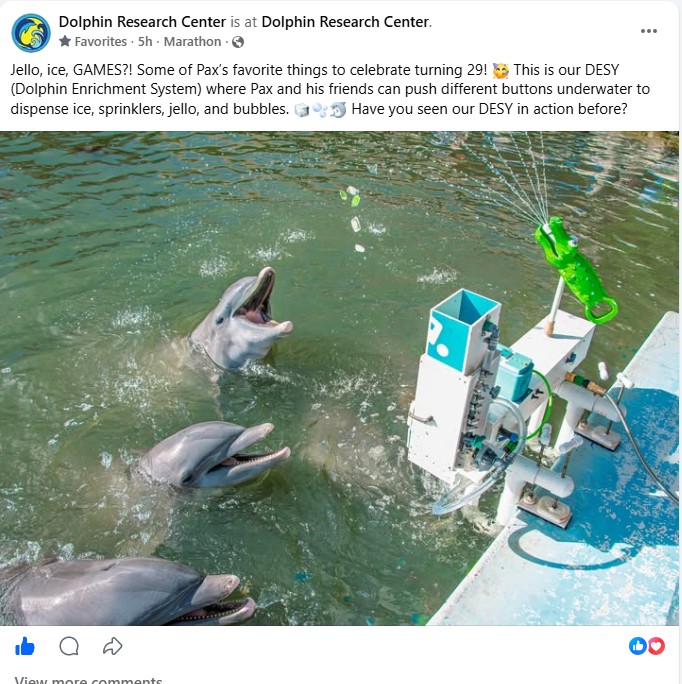
DESY (dolphin enrichment system) in action on Dec 4!
It is always wonderful to get videos or photos of our enrichment in action! This is especially fun since “DESY” (Dolphin Enrichment System) was our very first device! Thank you to Jennifer for sending these adorable photos of little Bowie enjoying DESY this weekend
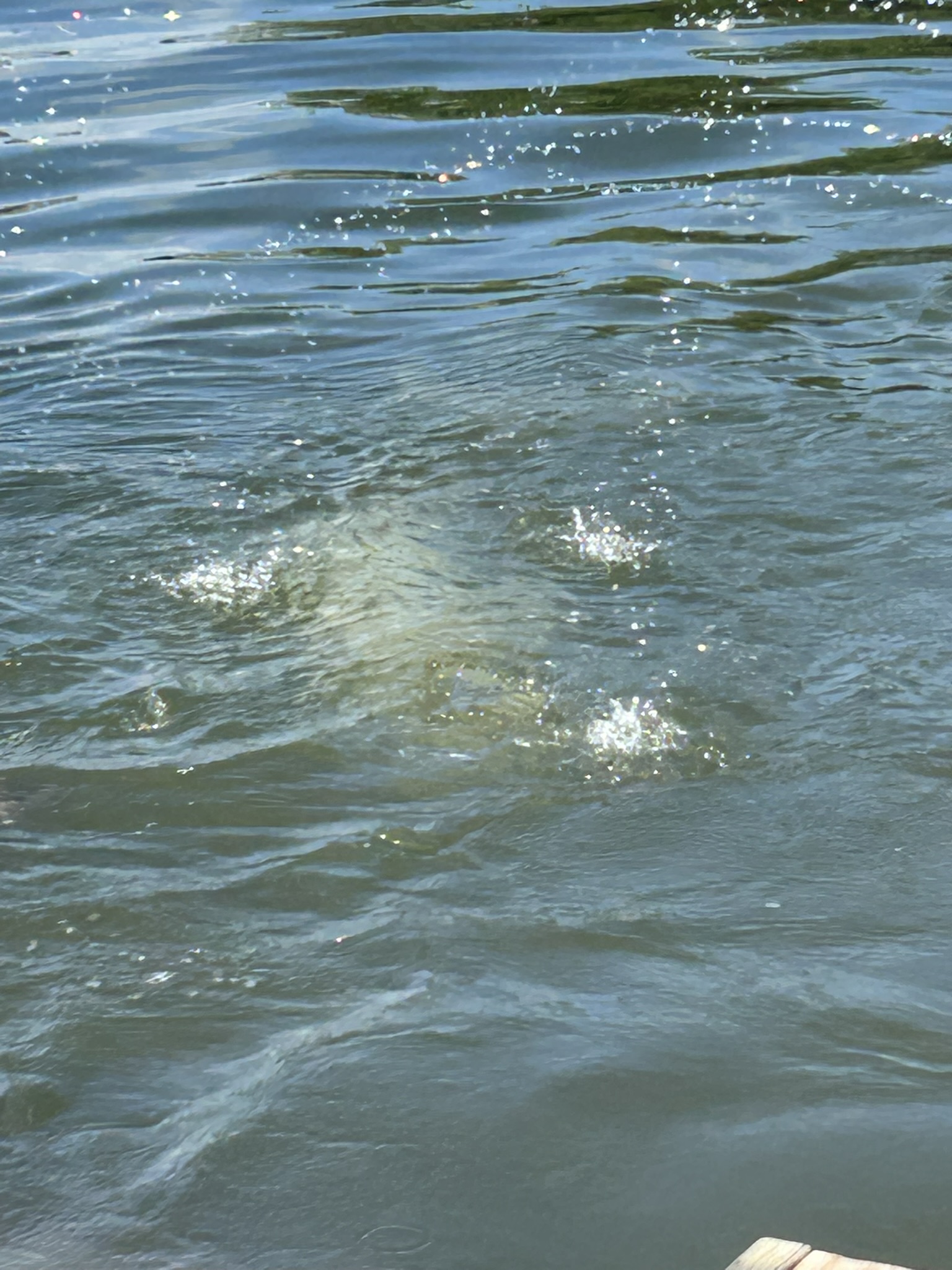
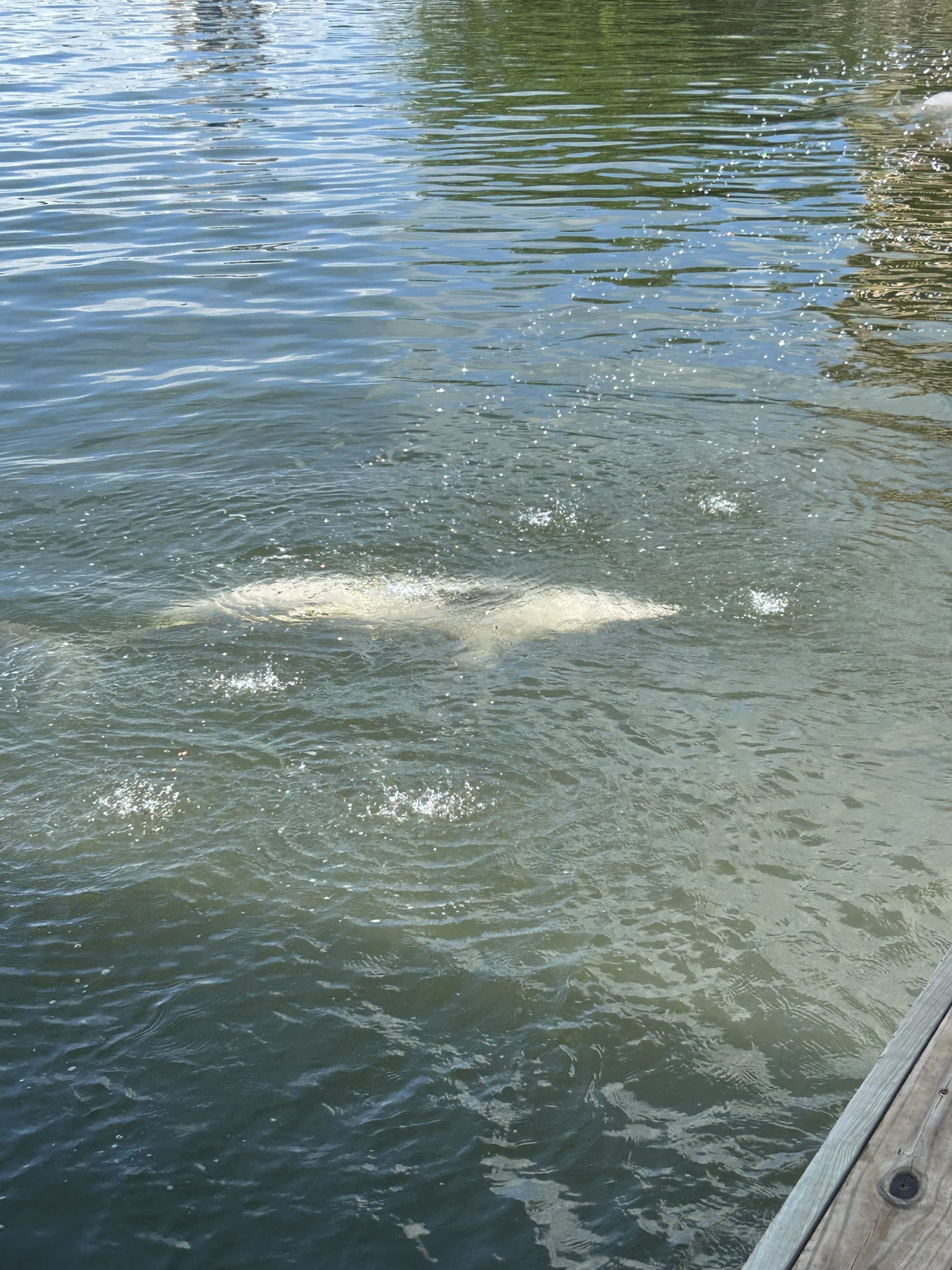
Calusa enjoying her DESY (Dolphin Enrichment System) – May 1, 2024
Cayo playing with DESY!!
DESY (Dolphin Enrichment System) returns to DRC’s Front Right Lagoon! May 1, 2024
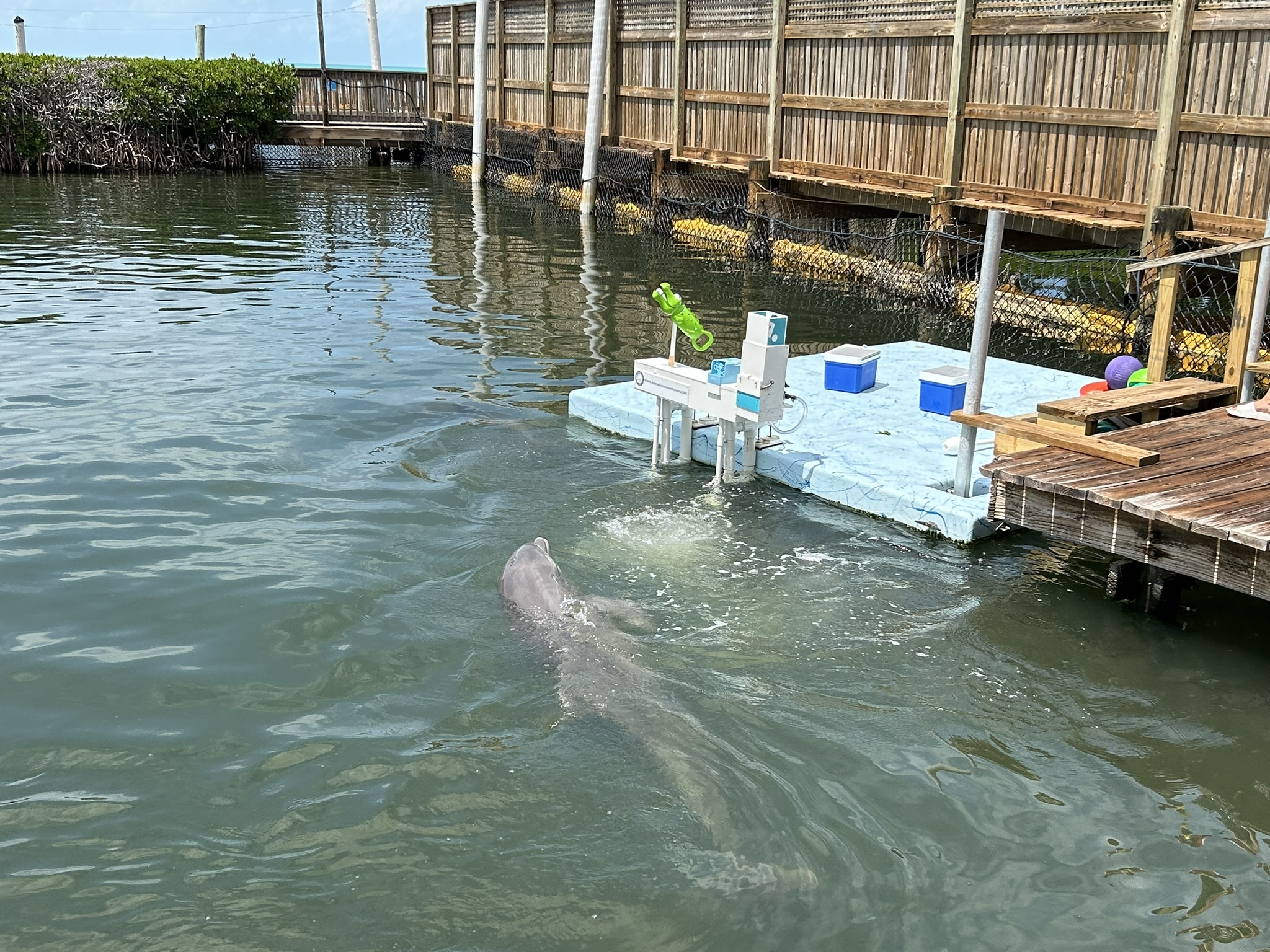
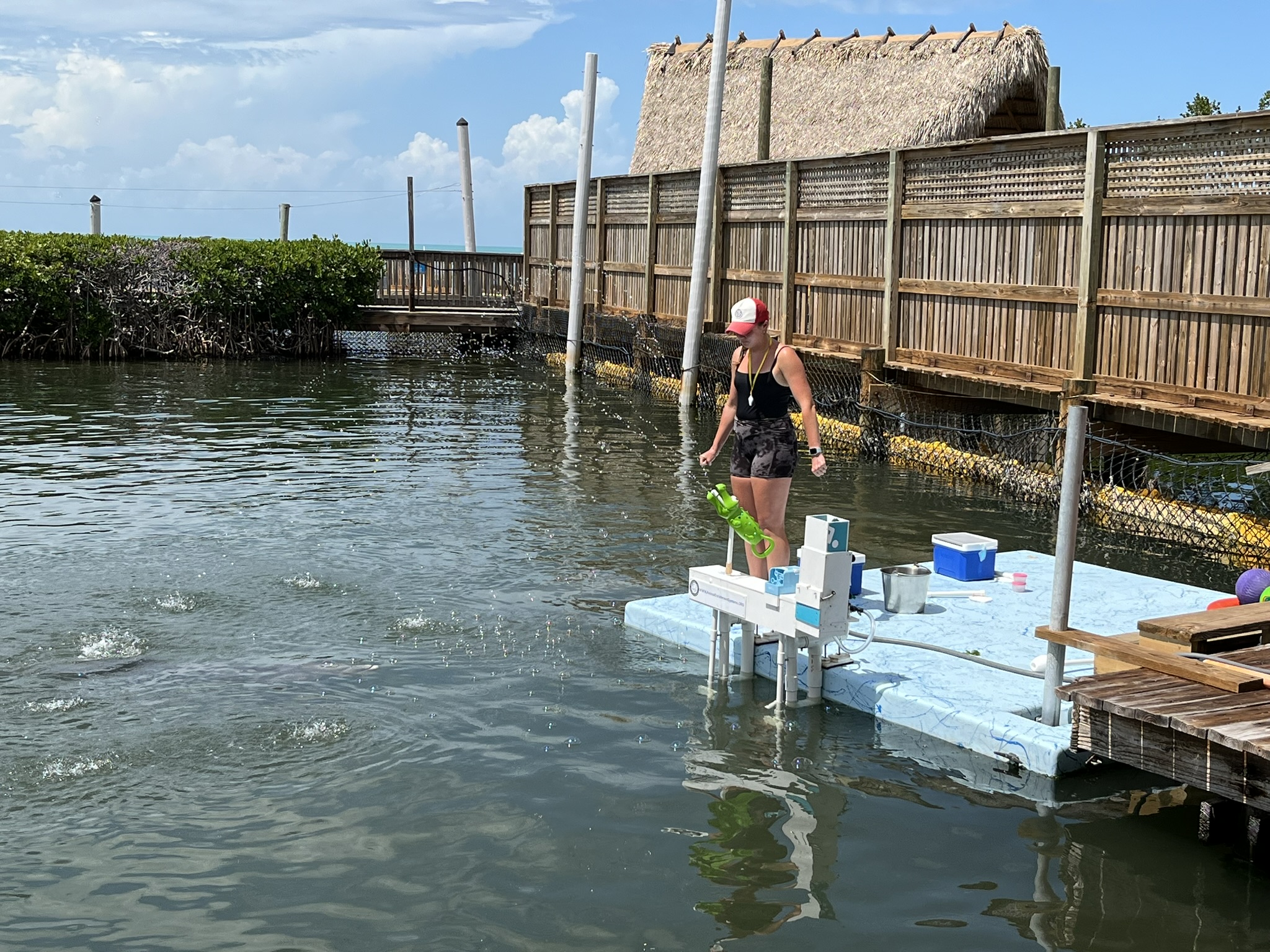
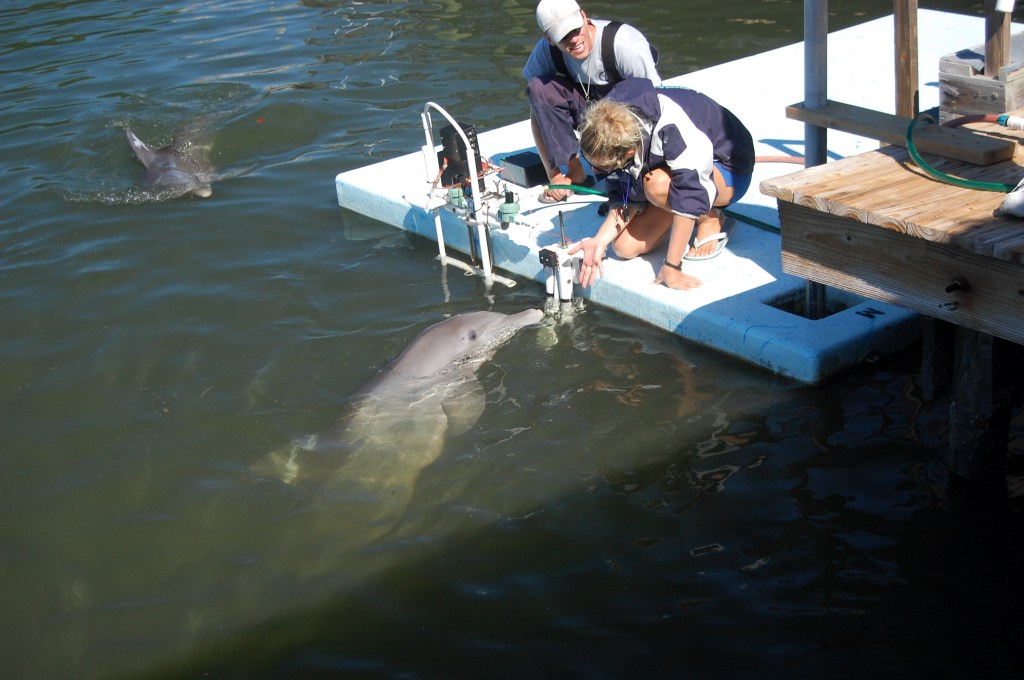
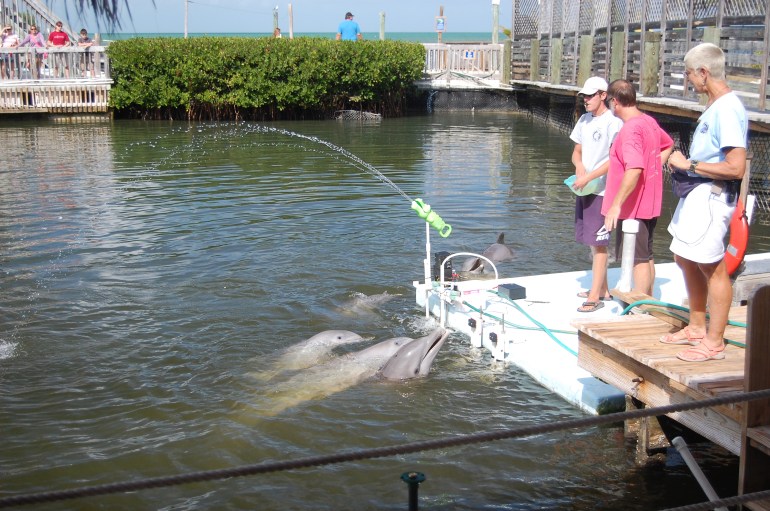
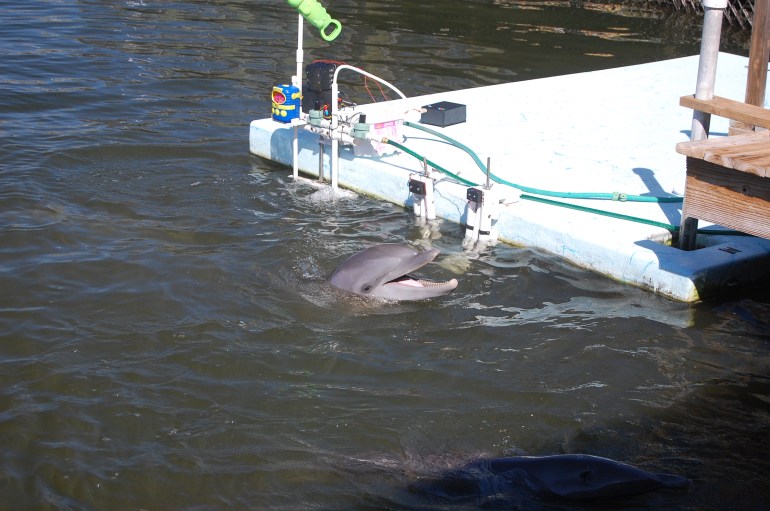
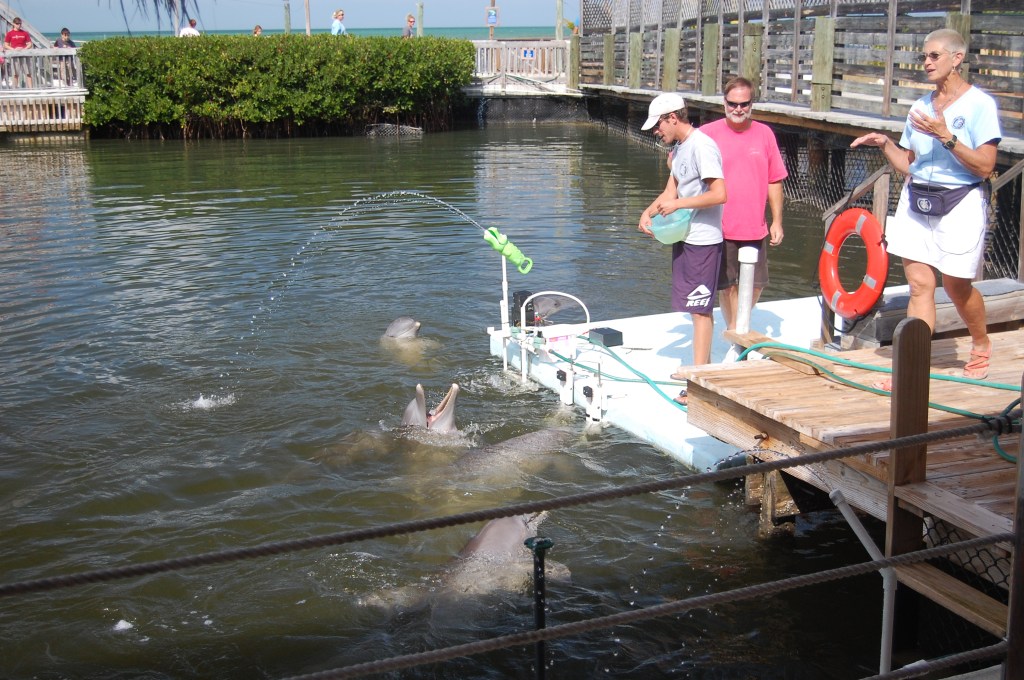
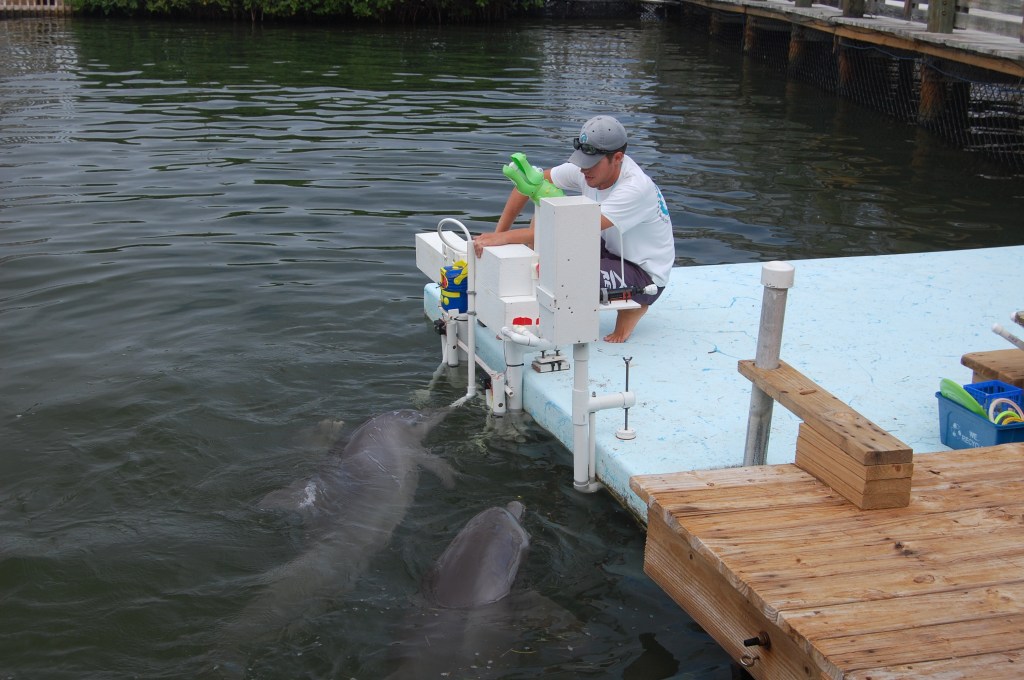
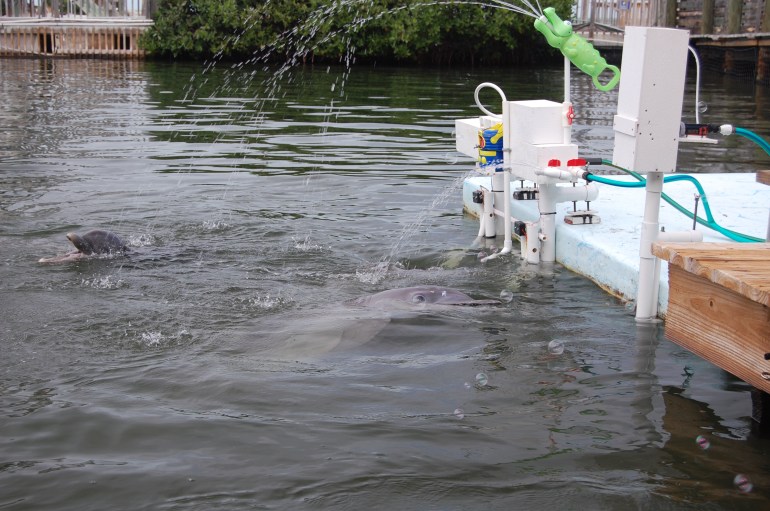
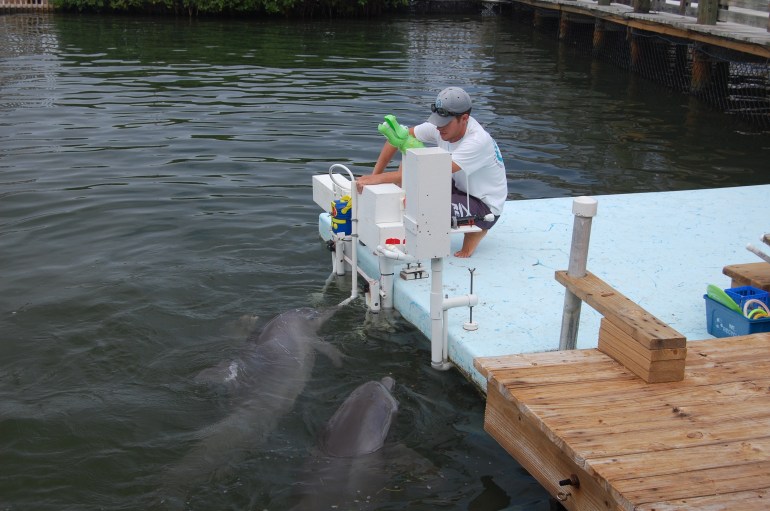
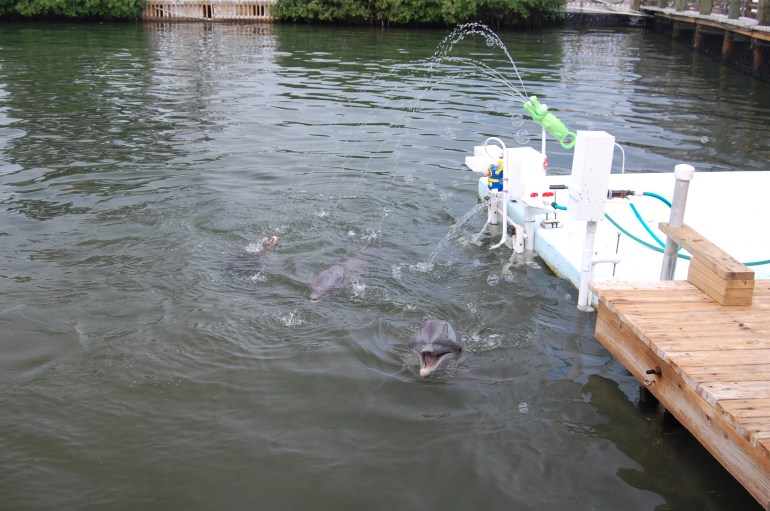
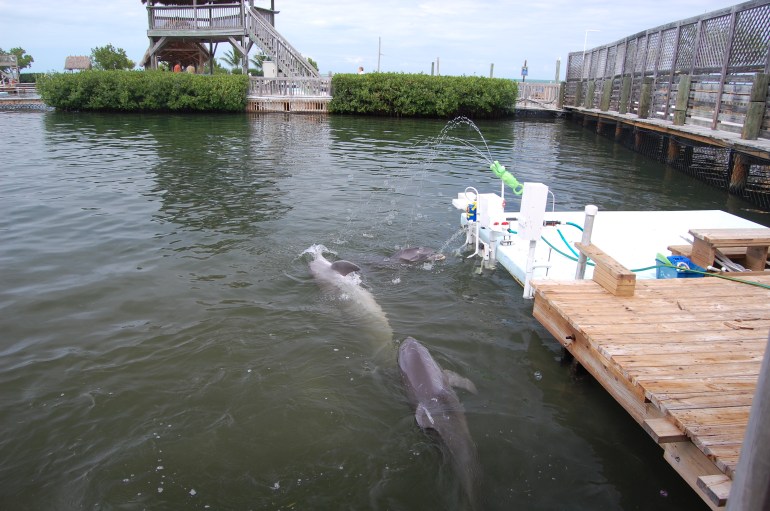
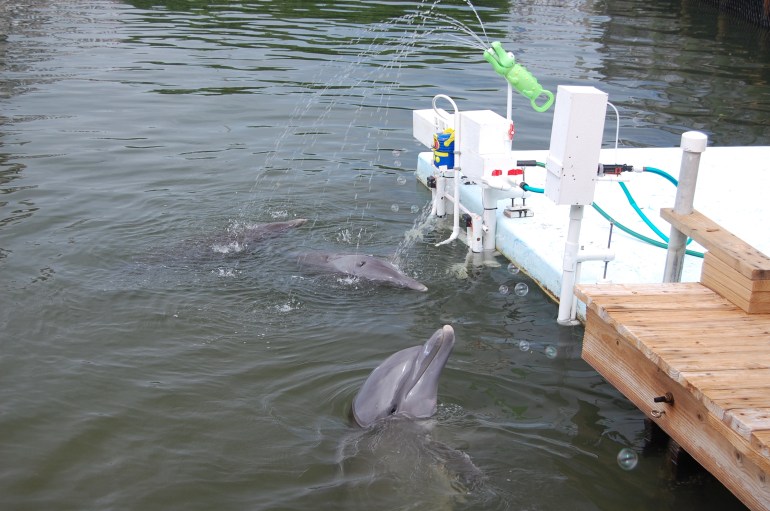
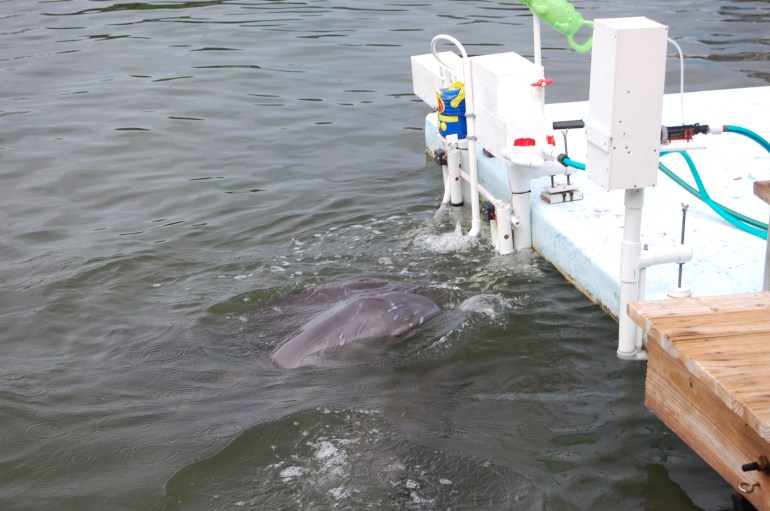
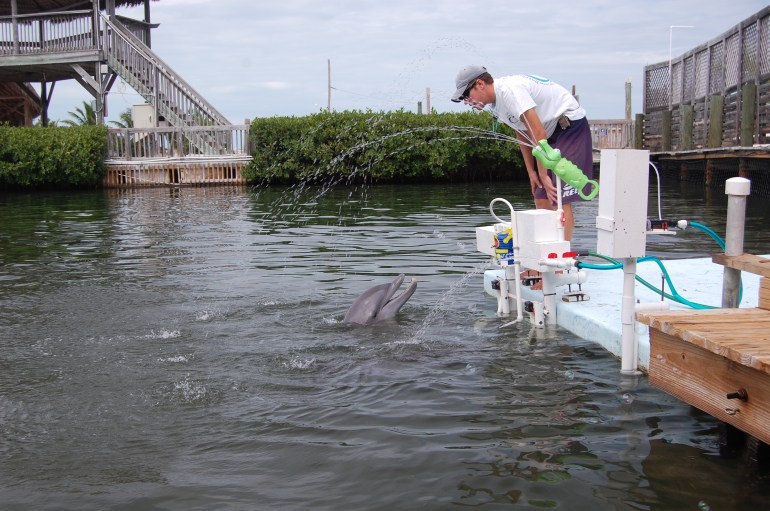
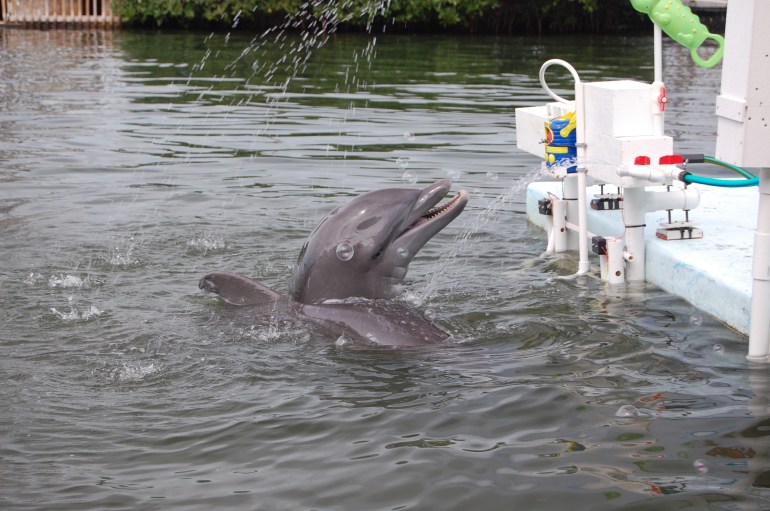
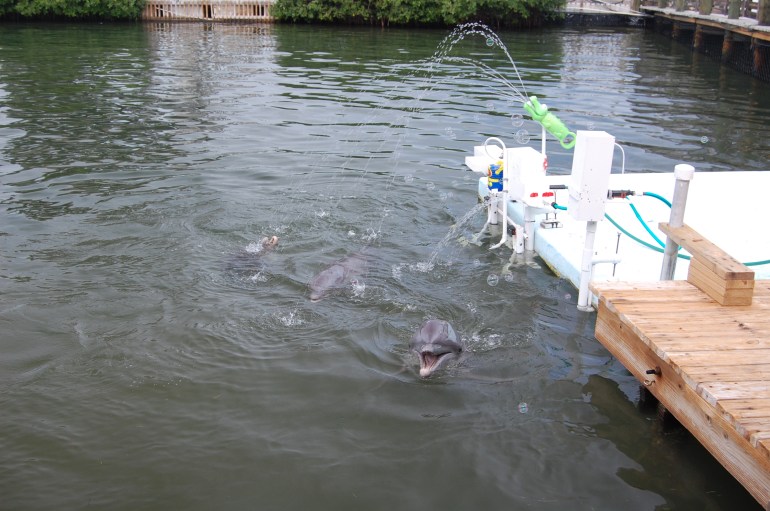
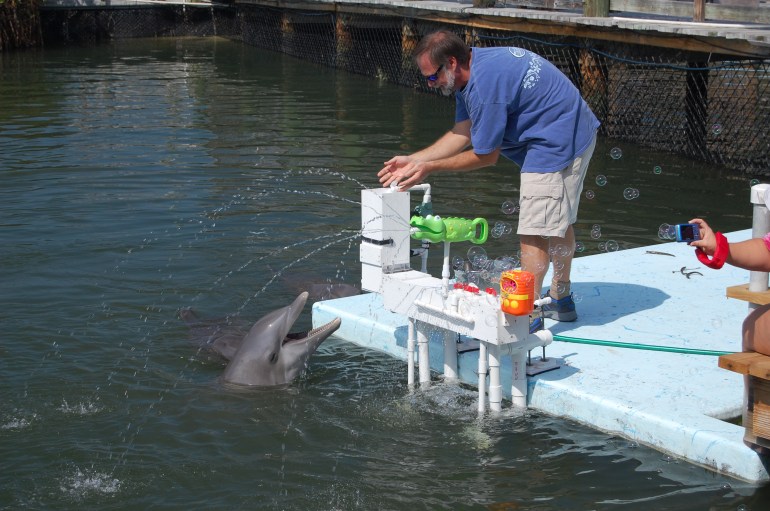
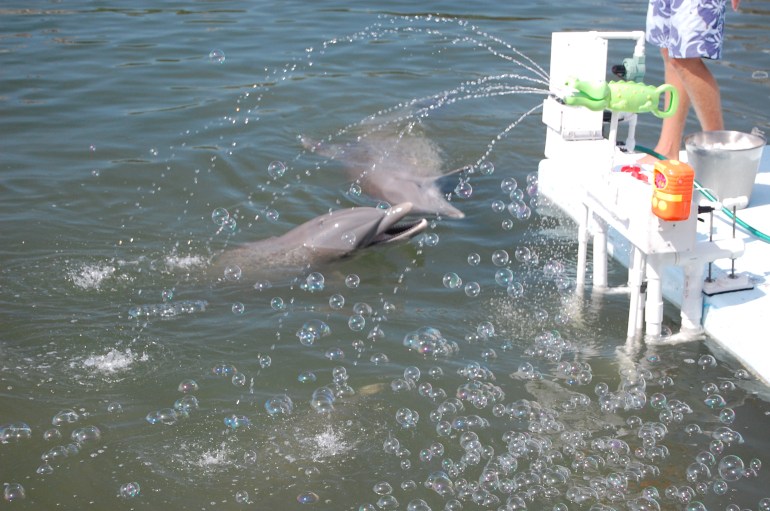
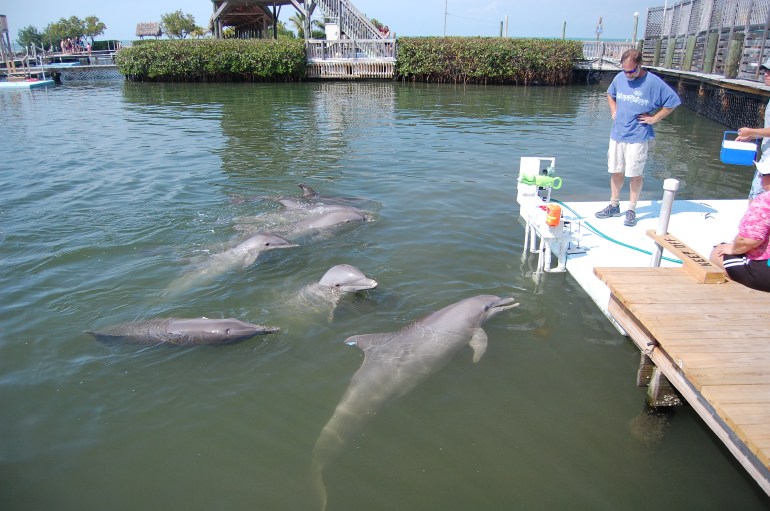
We were very happy to see Calusa, Cayo, and Santini enjoying DESY. It appeared they still recalled this enrichment from over ten years ago! Calusa and Cayo quickly mastered which paddle to press to turn on the underwater bubbler. They remembered their DESY enrichment well, blowing bubbles and pressing the second paddle to release the plain gelatin and ice. They took delight in the “Delphi gator” water sprinkler and bubbles, while Summer and Ranger showed curiosity.
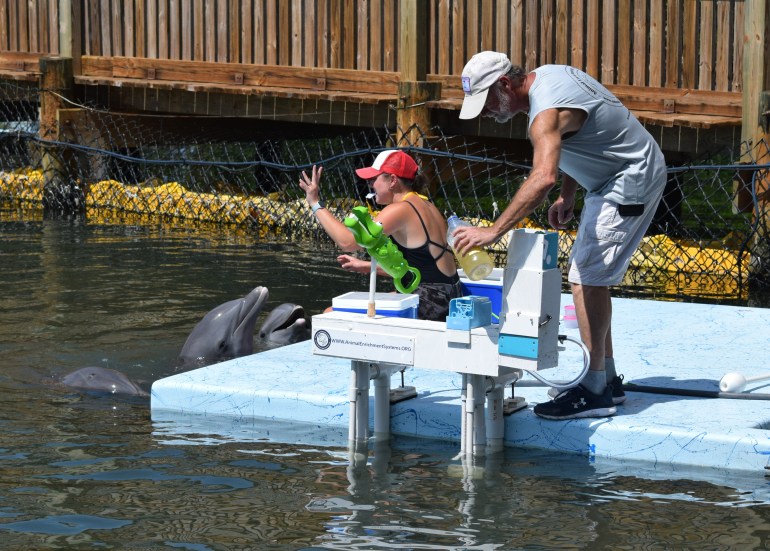
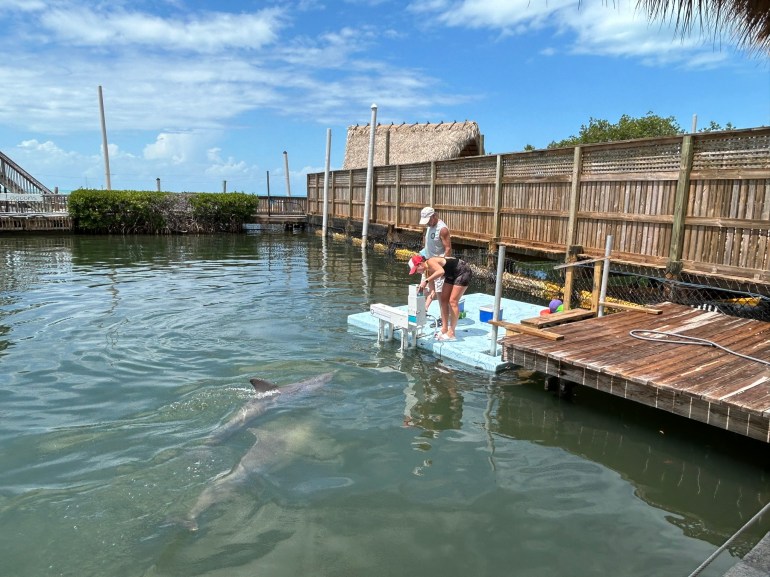
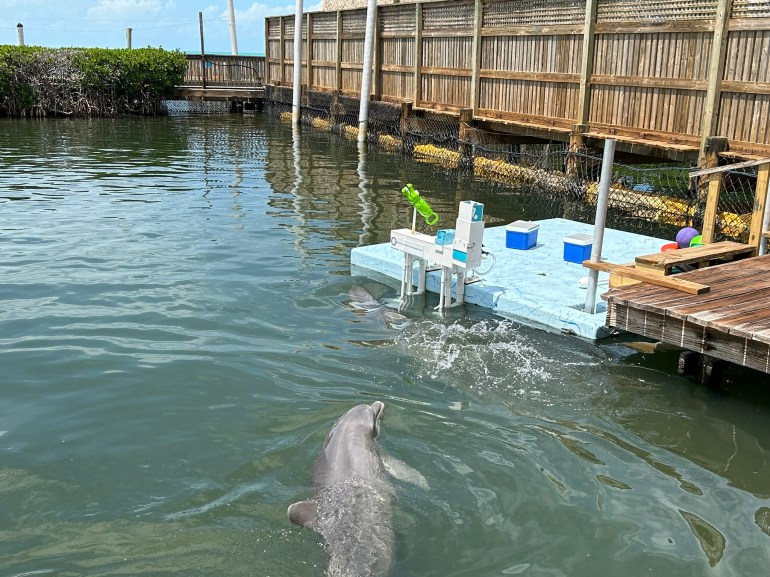
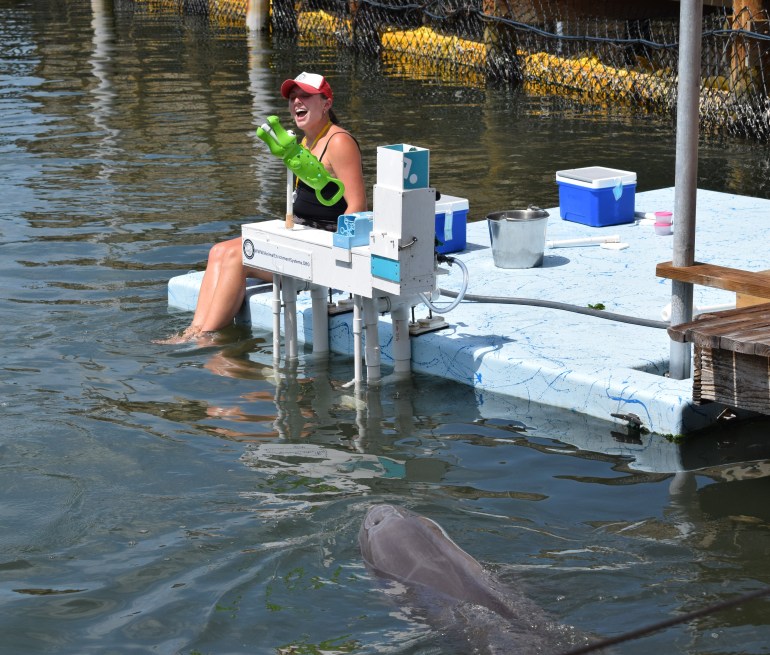
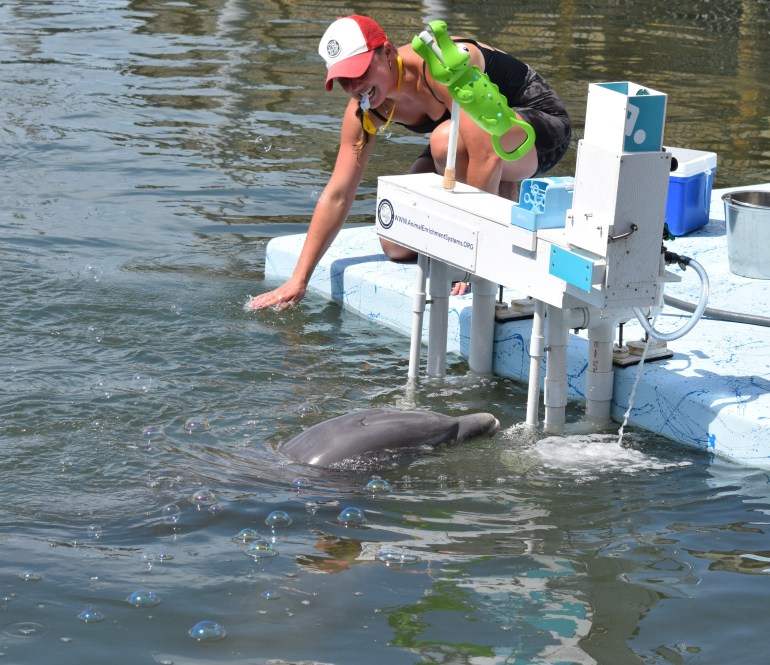

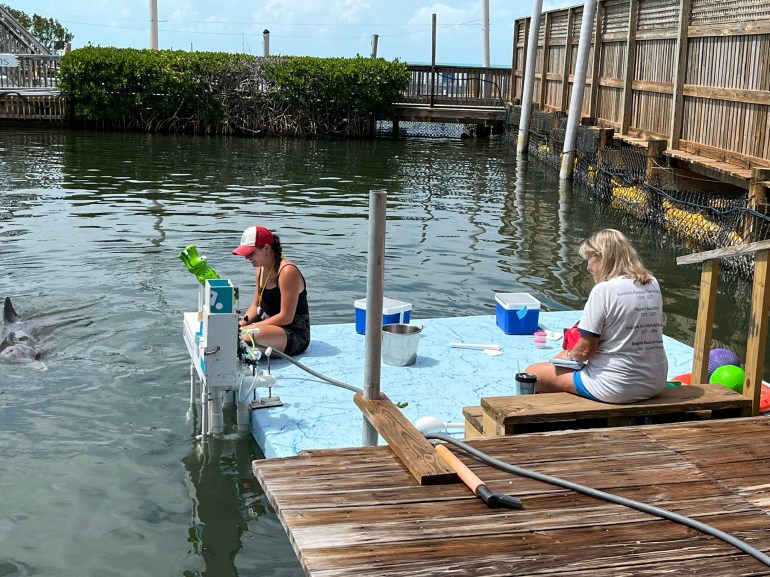
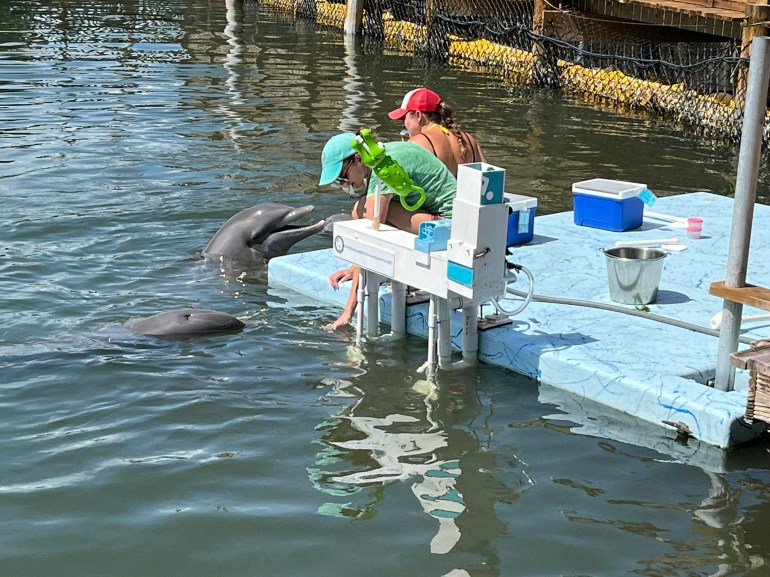
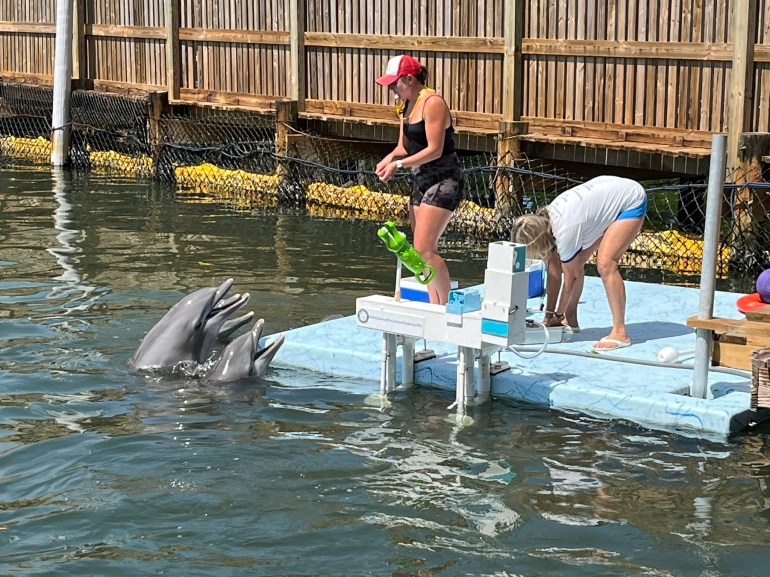
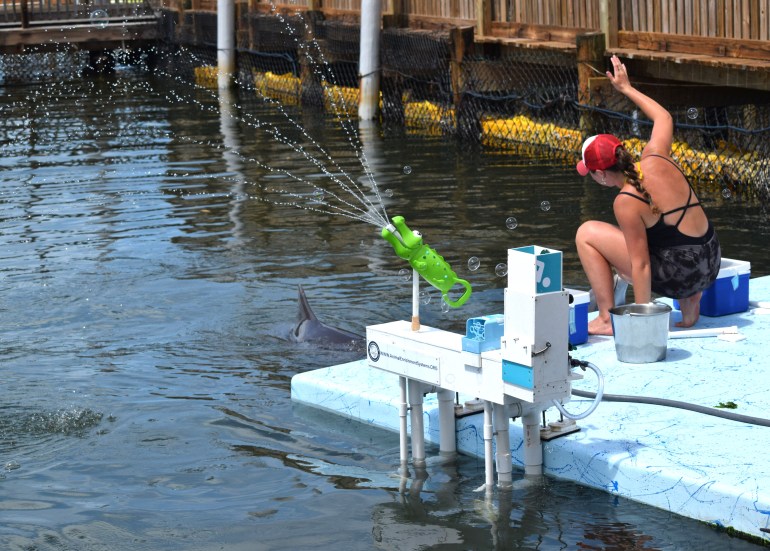


Fintastic Fun with DESY at Dolphin Research Center – May 1, 2024
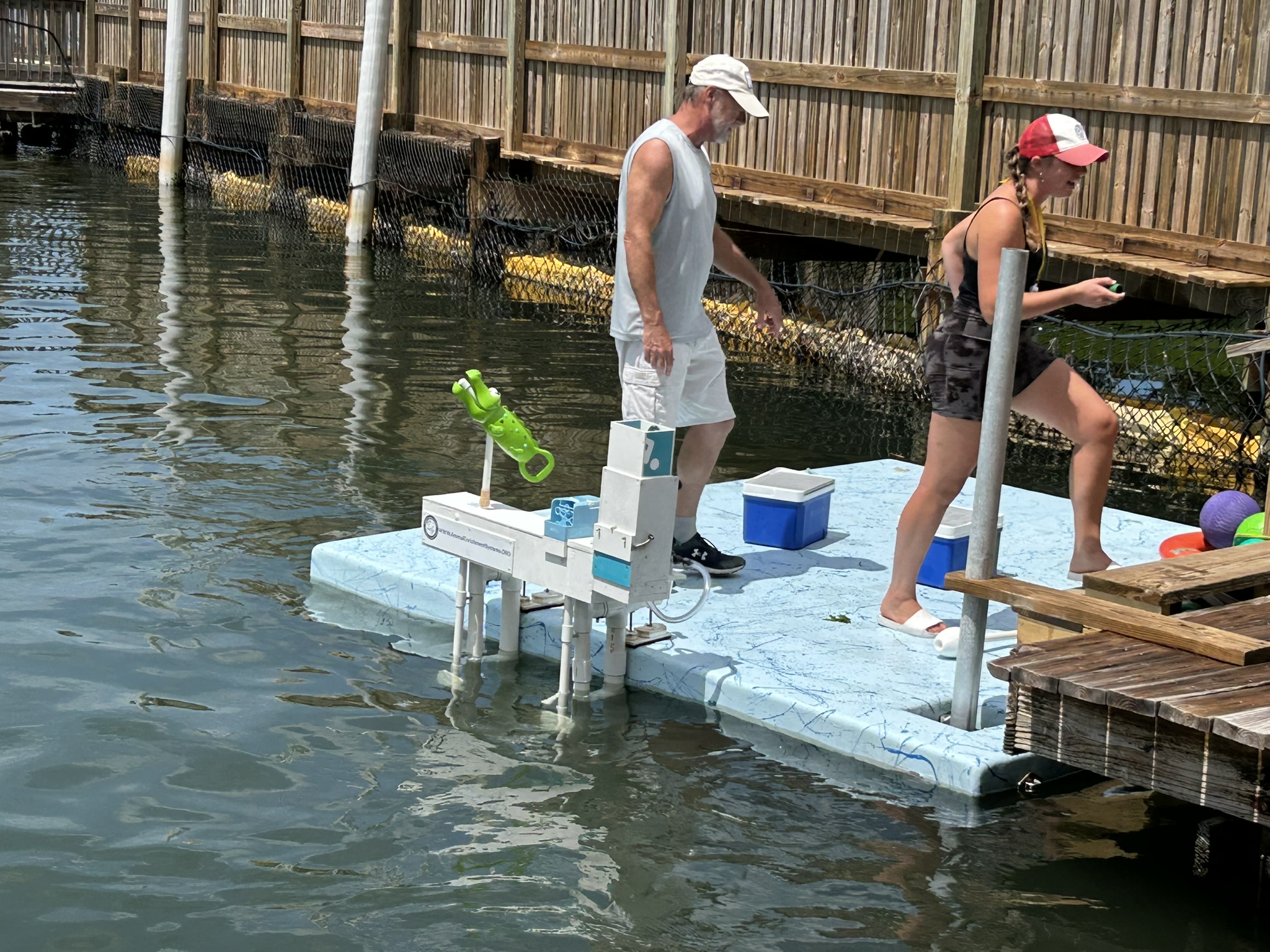
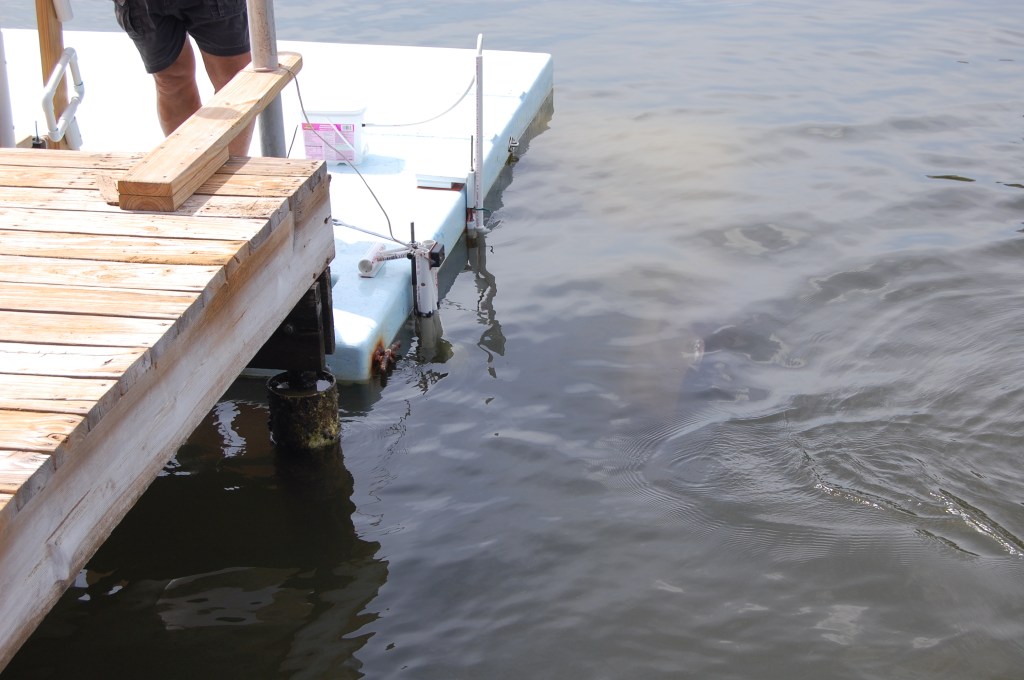
First test on dock! We were very happy to be able to let the dolphins explore their enrichment device. They were curious and pushed the paddles.
Scroll through the slideshow
Dolphin Enrichment System – first test at DRC! April 30, 2024
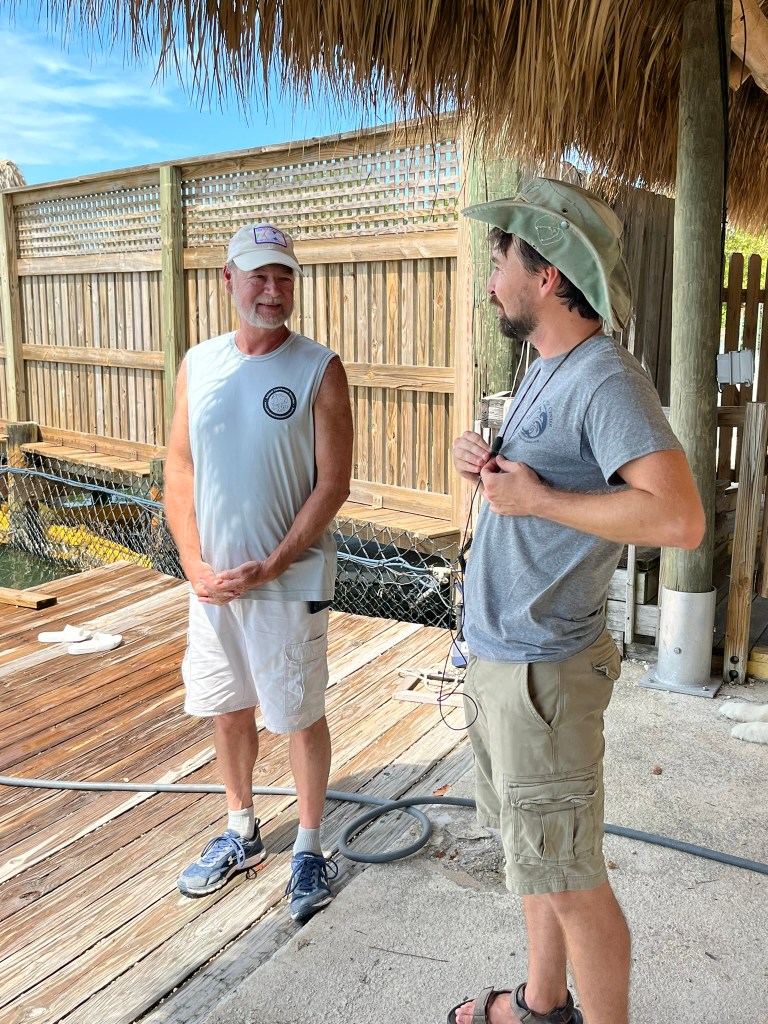
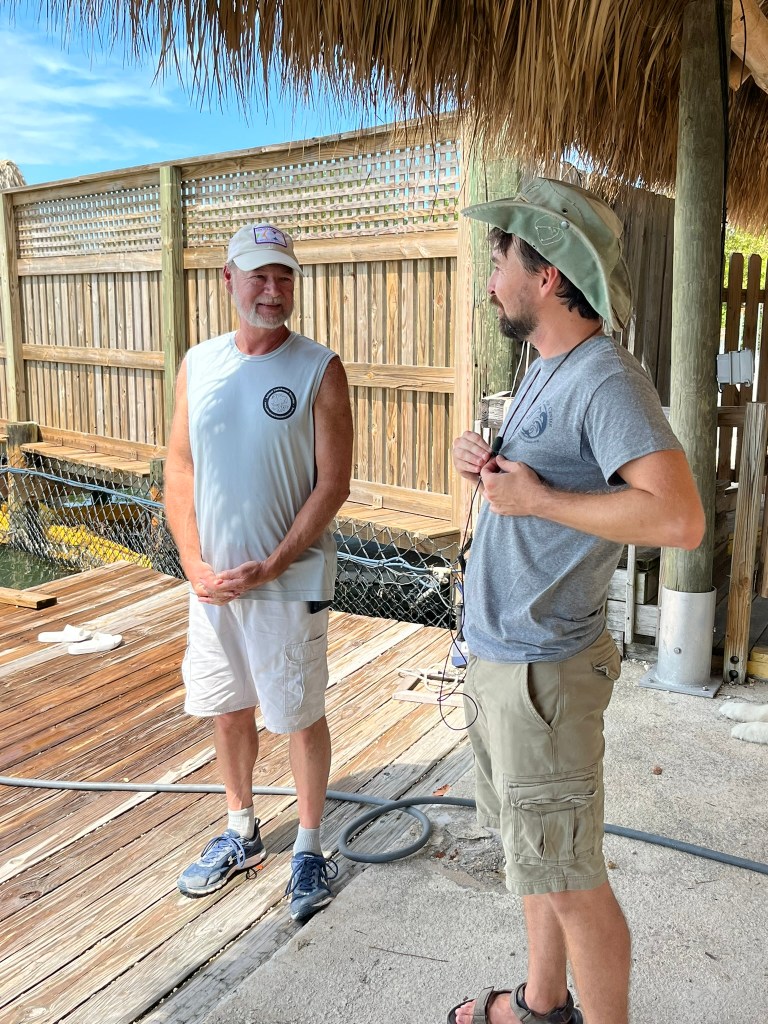
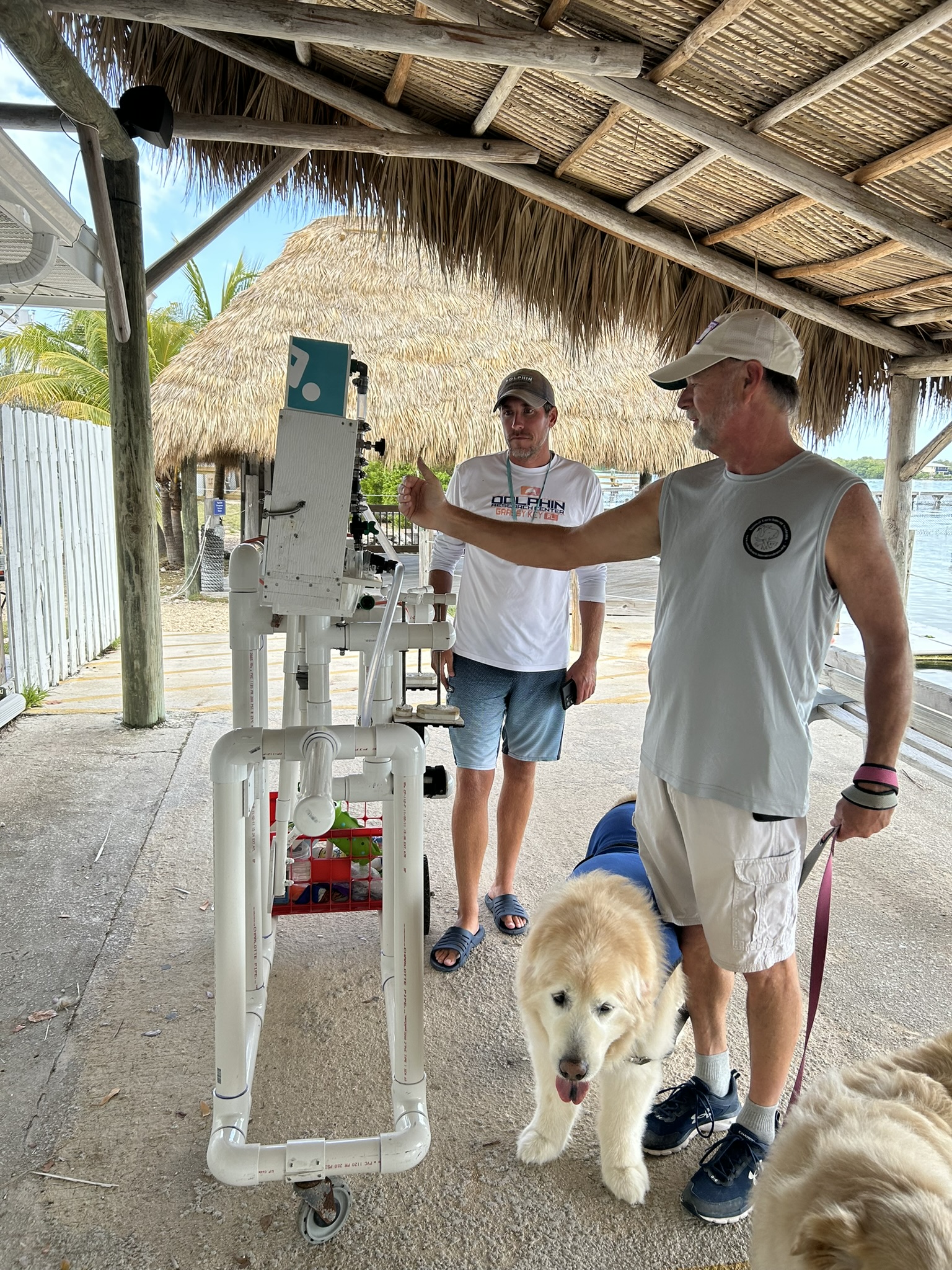
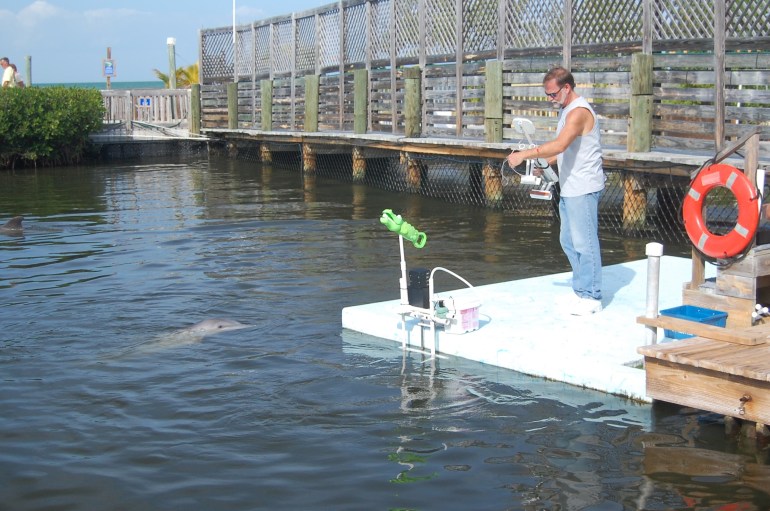
Some photos and video of Don explaining the DESY to Linda and Nicki before it was used on the docks
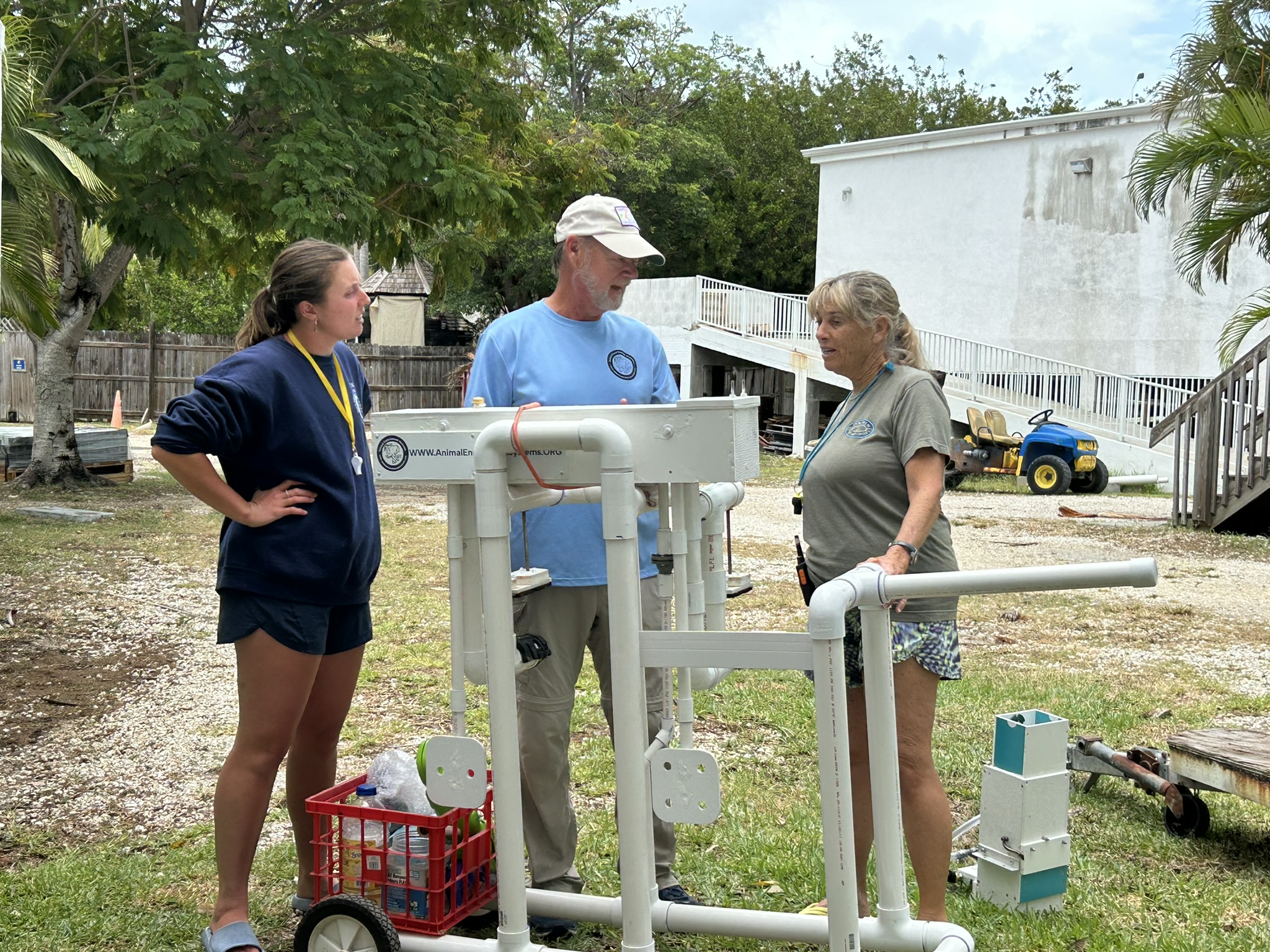
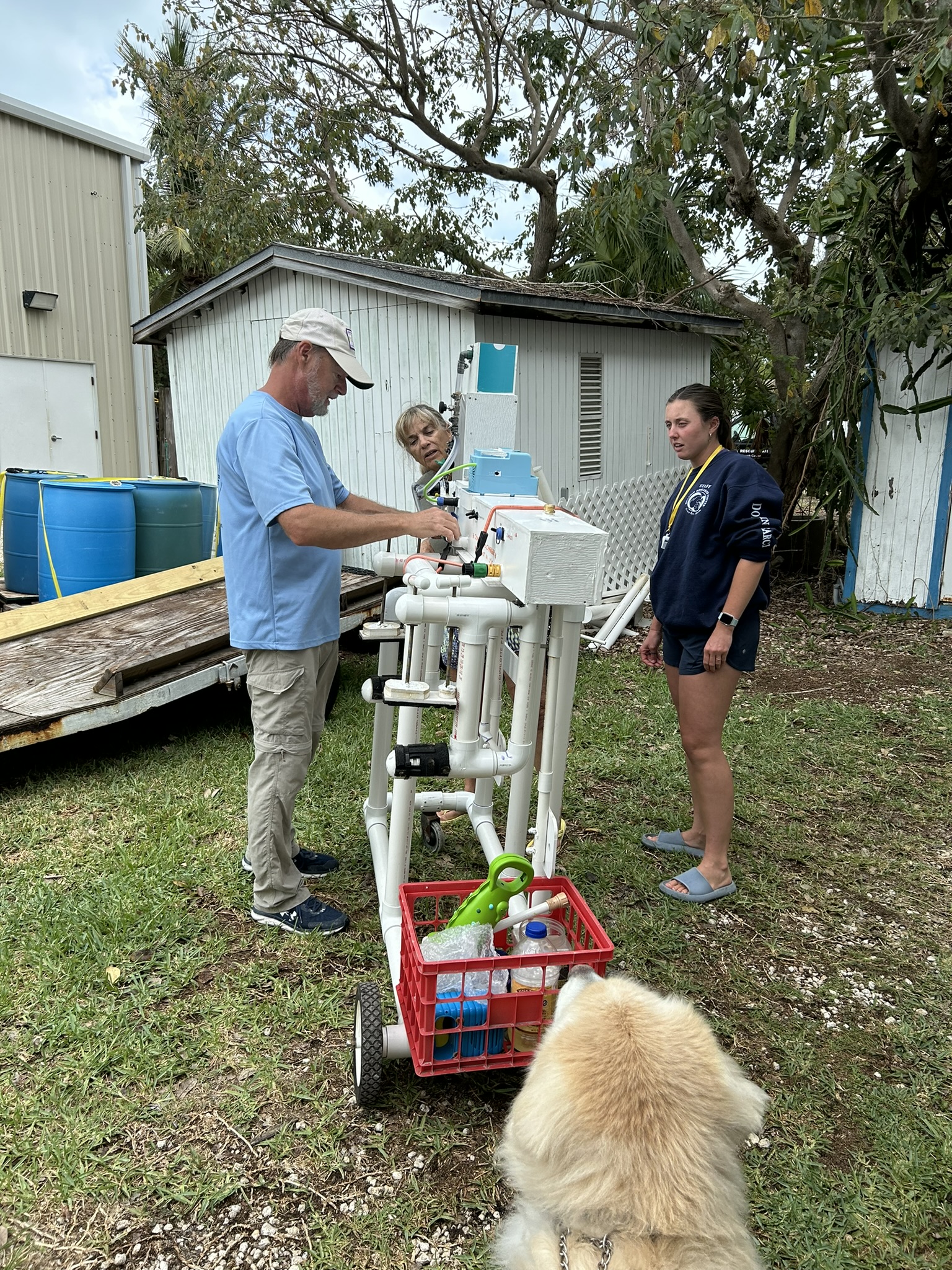
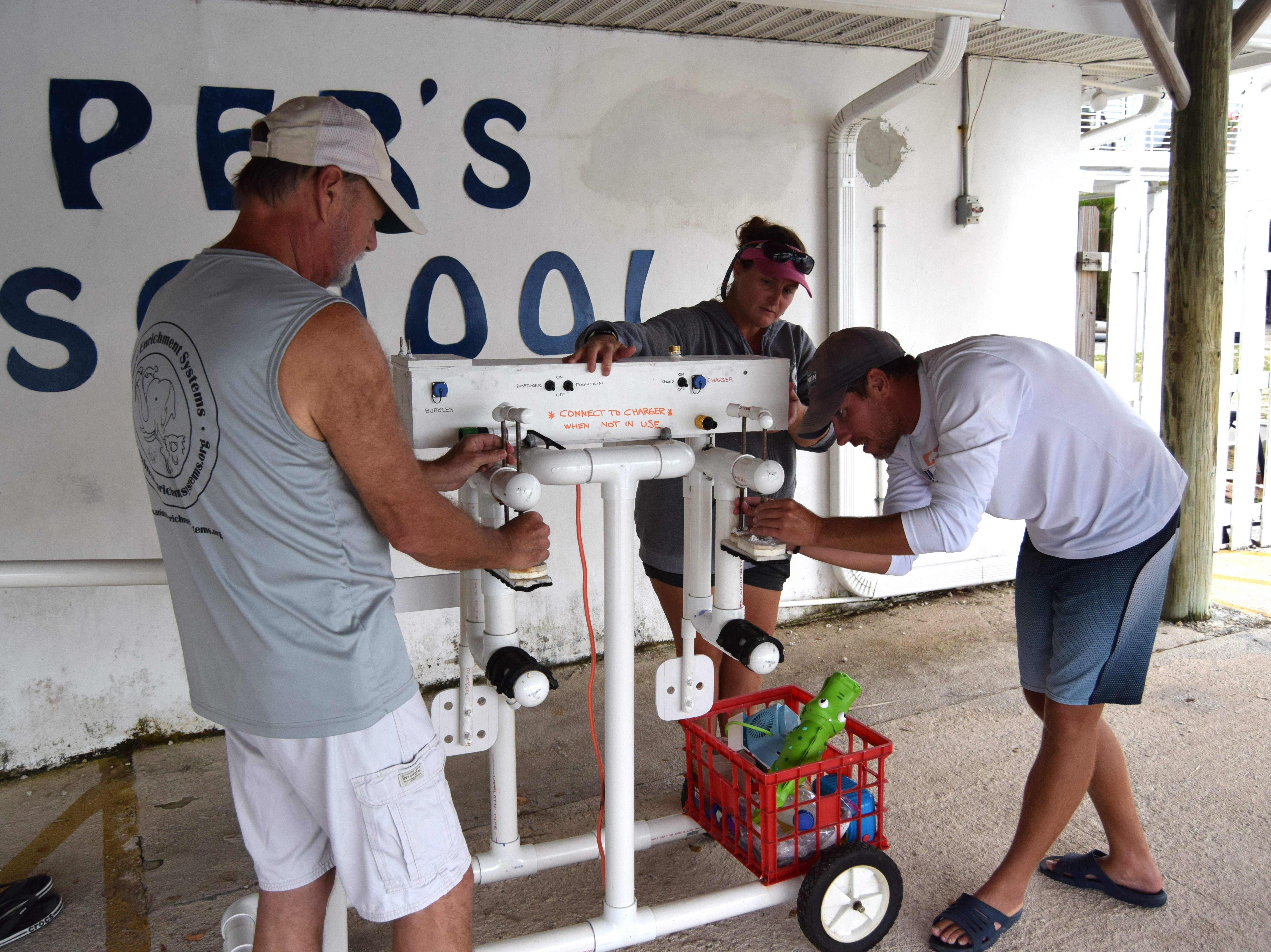
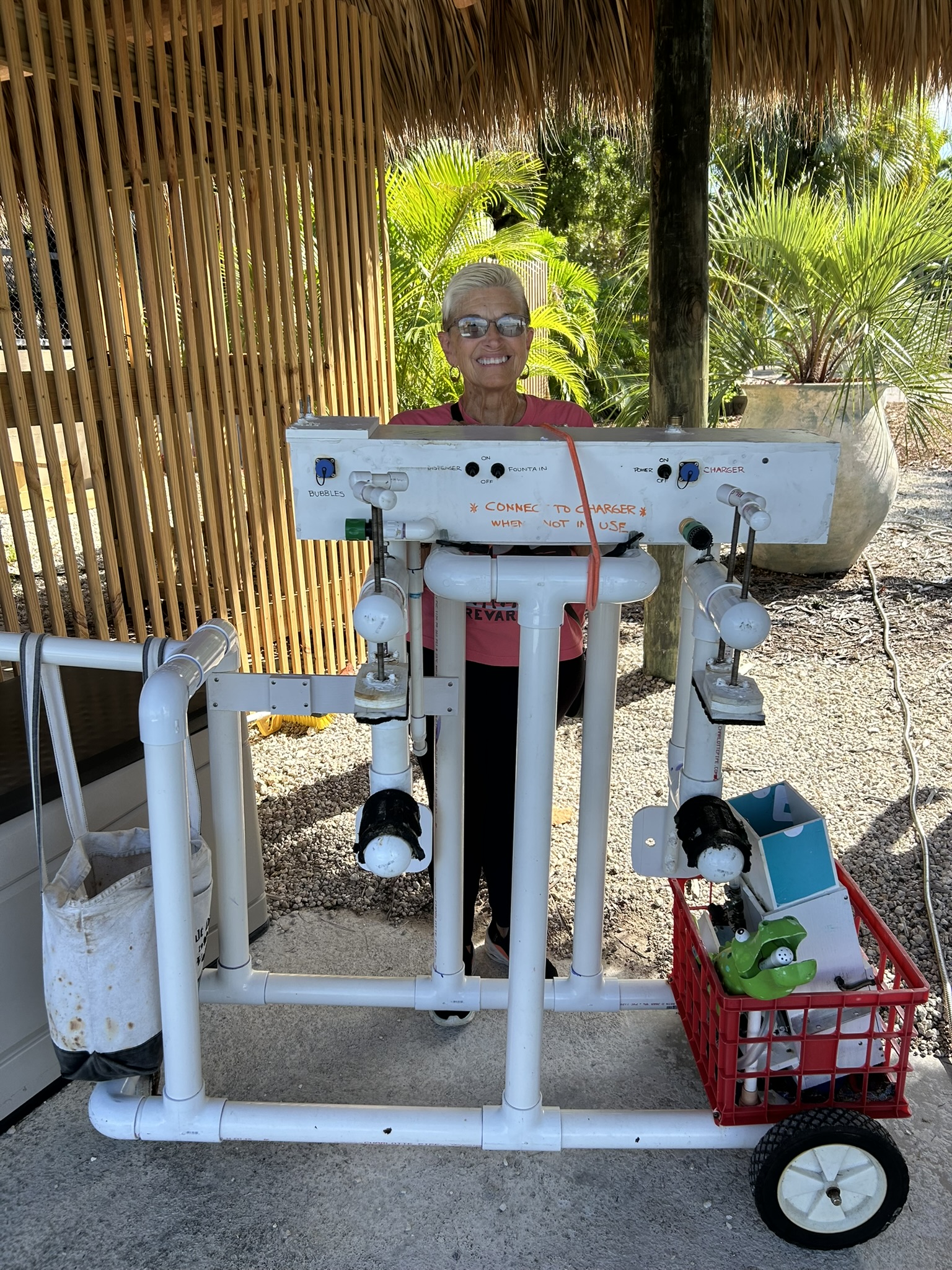
Introducing the new and improved DESY (Dolphin Enrichment System).
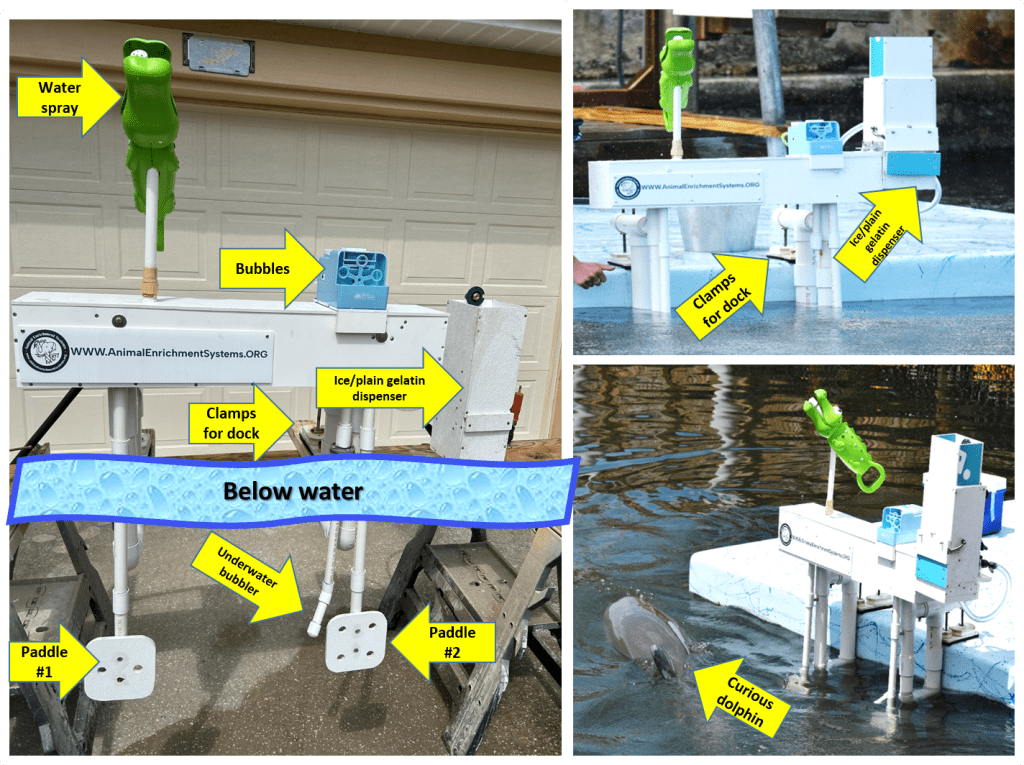
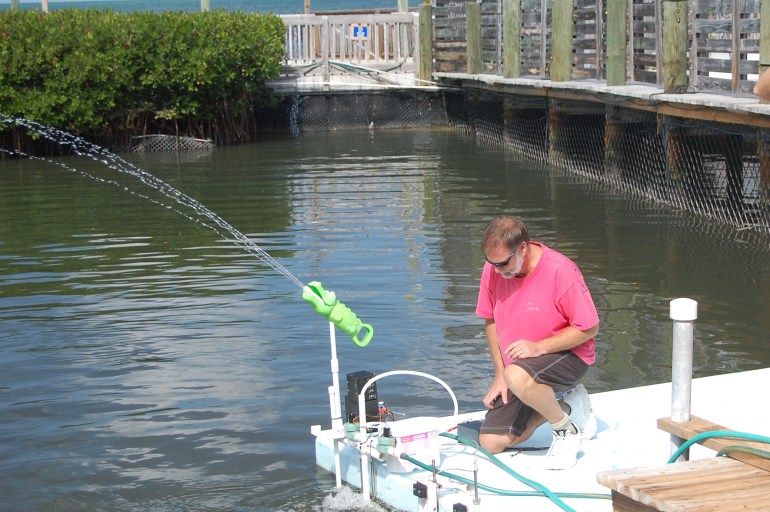
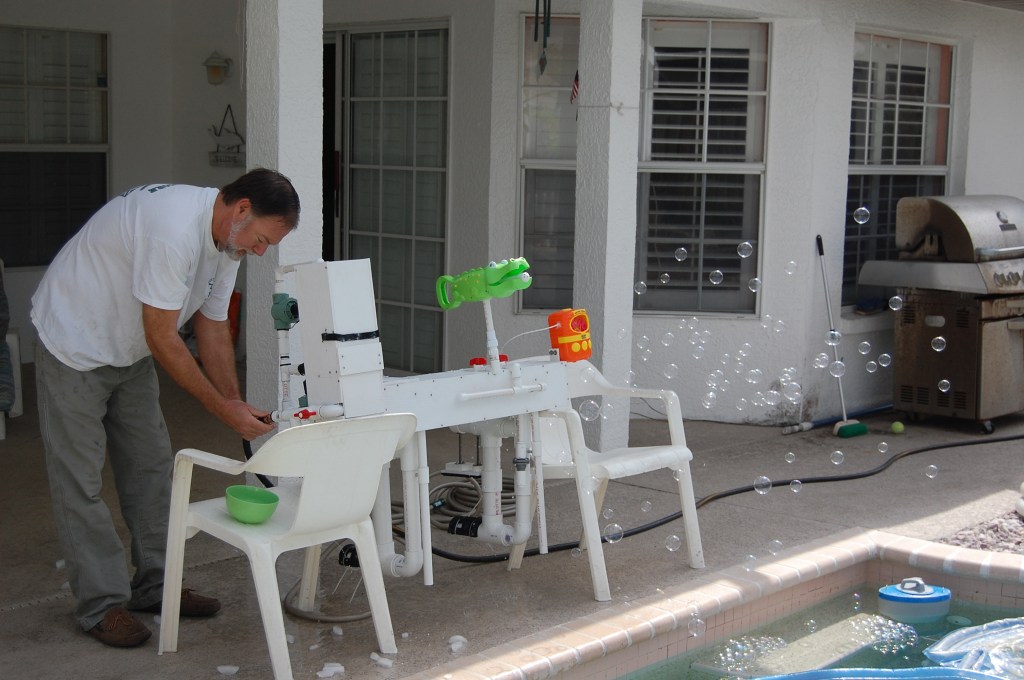
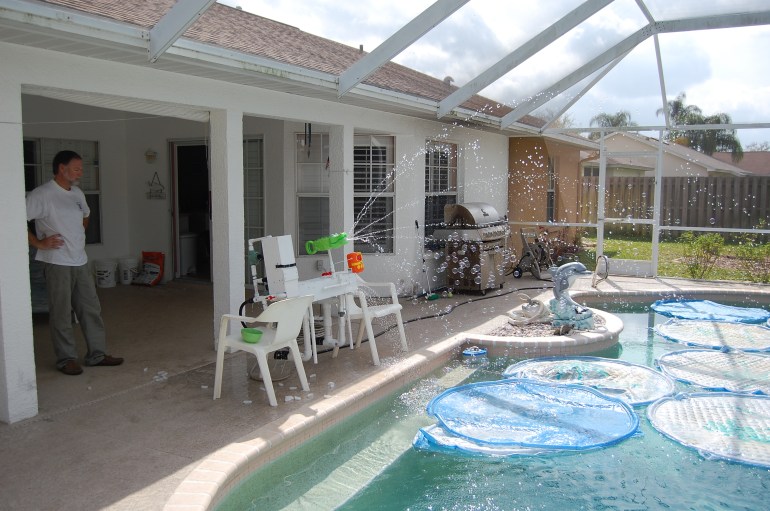
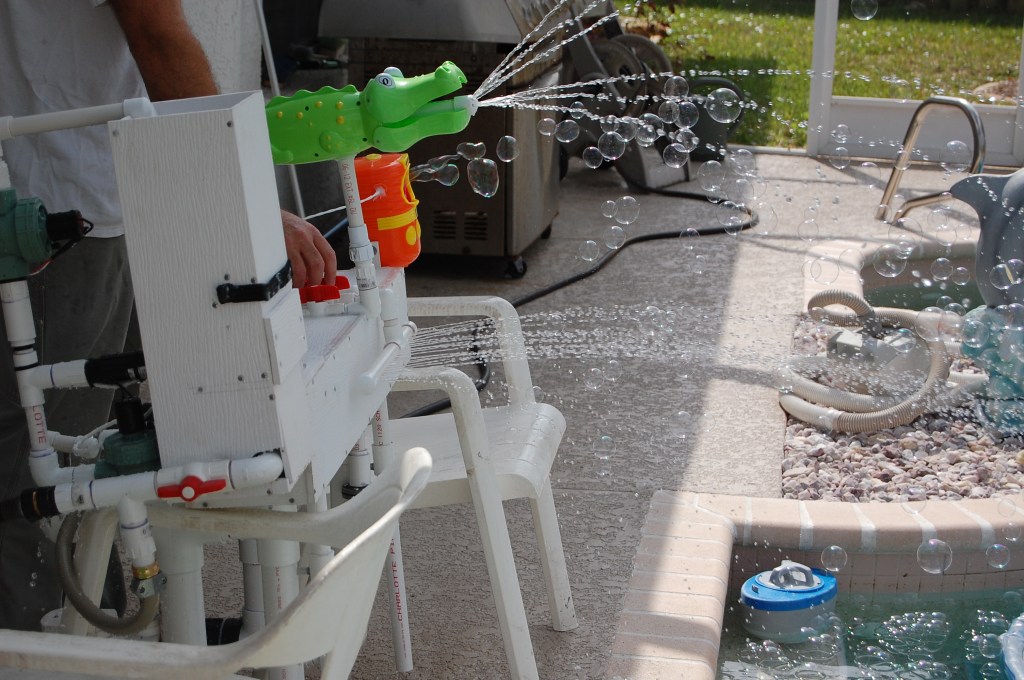
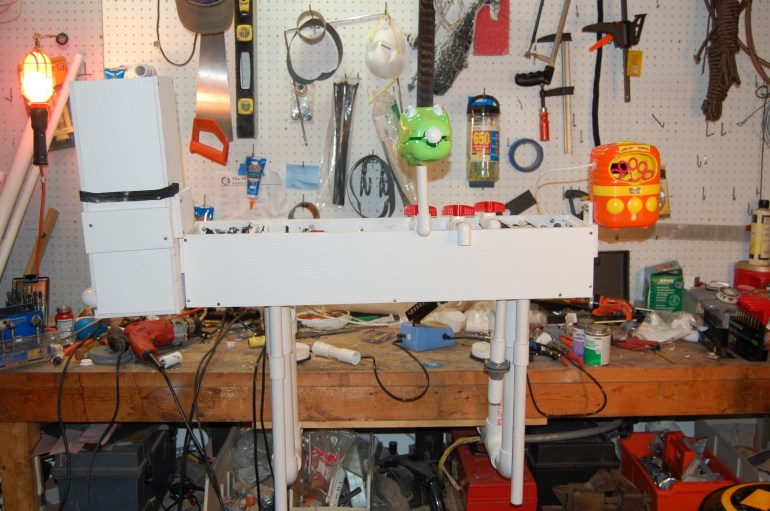
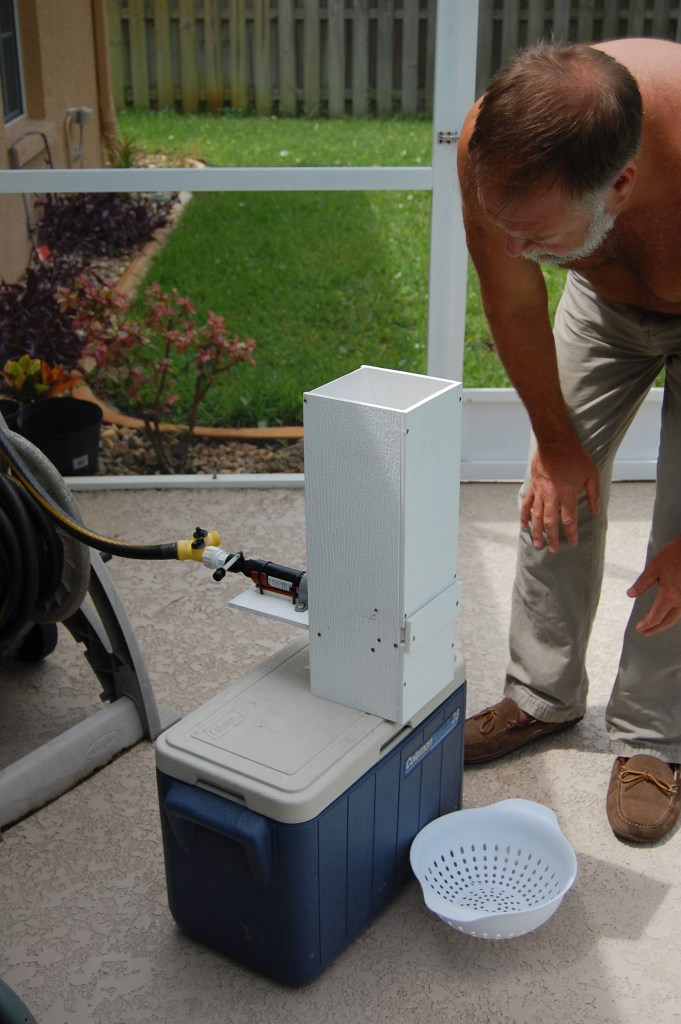
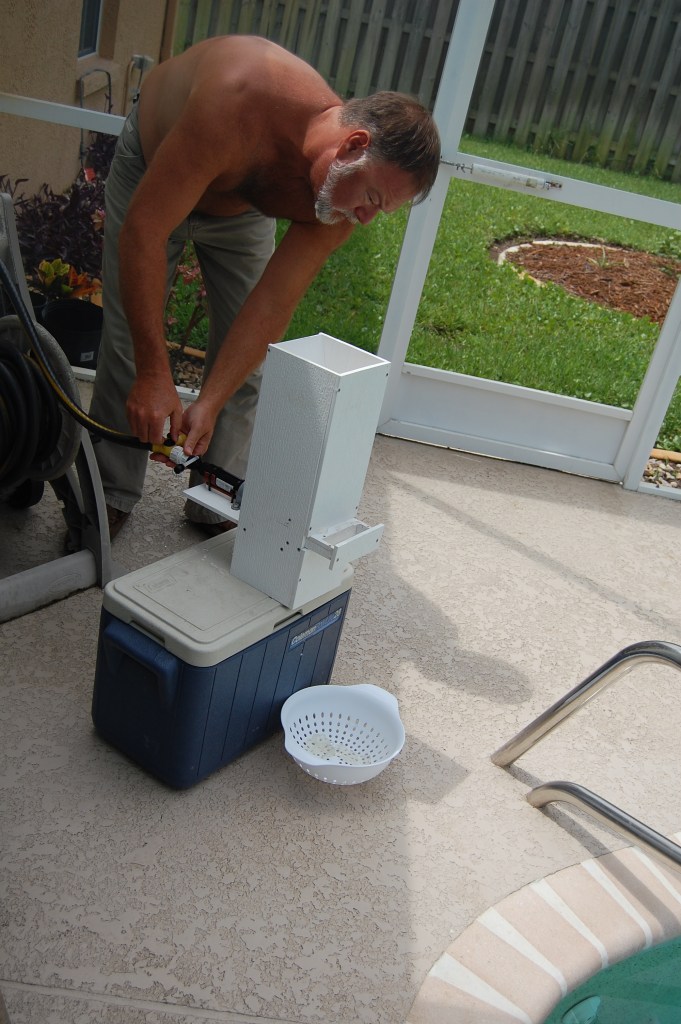
It has three enrichment options: Soap Bubbles, Water Fountain (Delphi Gator), Ice or Gelatin Dispenser (tested in our driveway before we headed to Dolphin Research Center last week)
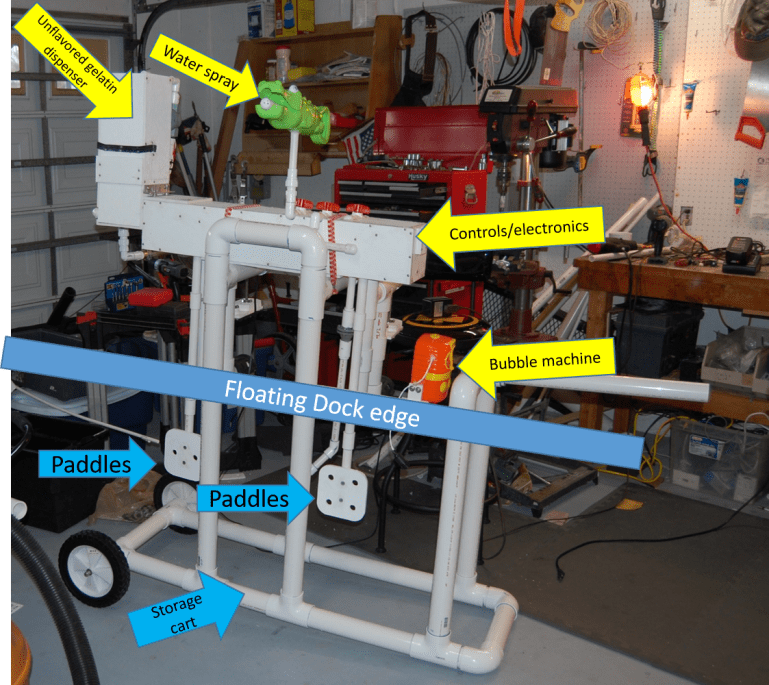
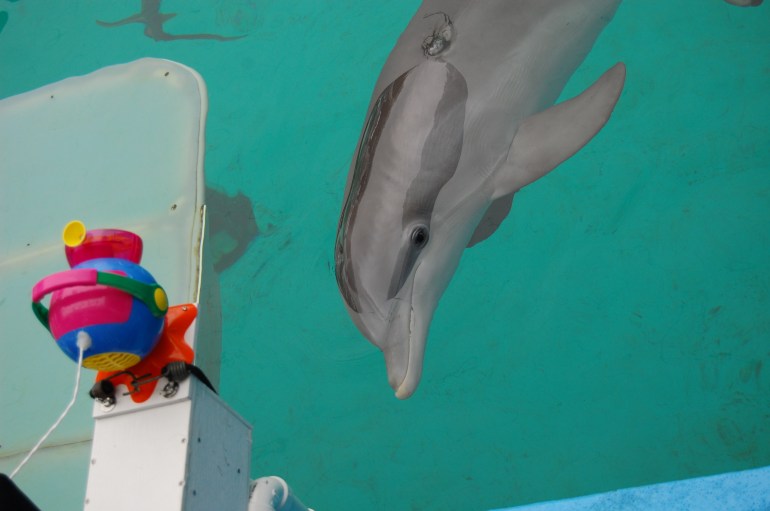
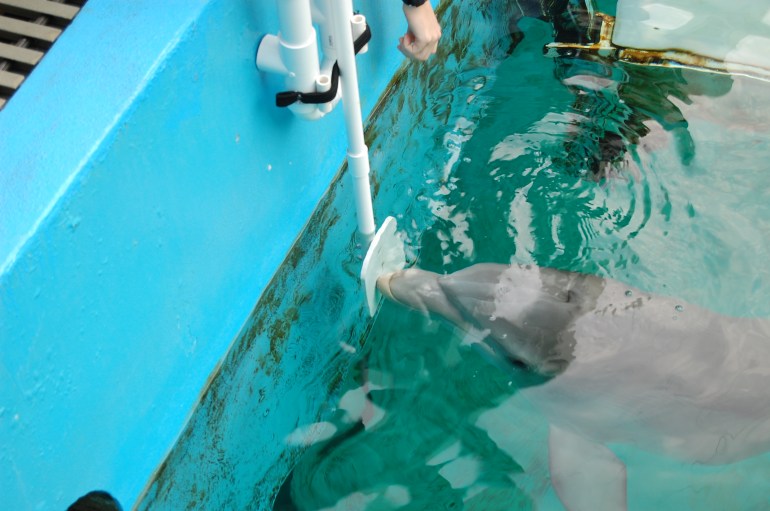
The underwater paddles are designed for the dolphins to press with their rostrums. The paddles have different numbers of holes to allow the dolphins to identify them using their echolocation. Paddle #1 has two holes, Paddle #2 has four. Paddle #1 must be pressed first to activate the underwater bubbler which enables Paddle #2. Paddle #2 needs to be pressed to activate the enrichment (water spray, ice/gelatin dispenser, bubble machine) (watch the video below this photo)
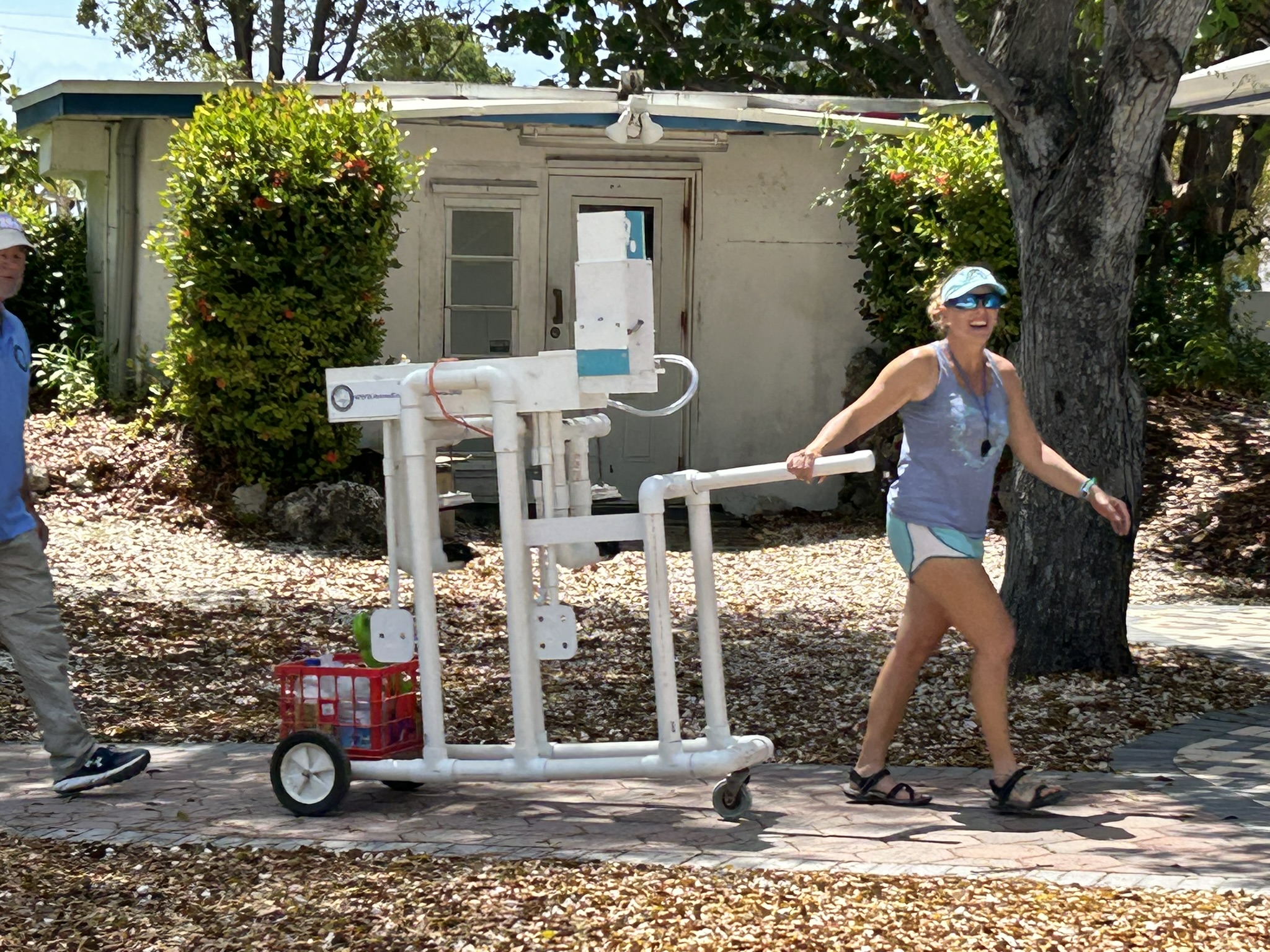
FINTASTIC NEWS! “Desy” is back at DRC! More photos and videos to come soon!
Don put in about 40 hours of working to improve, redesign and get Desy working so we could deliver to DRC during our Keys vacation last week. Some of the dolphins (Santini and Calusa) definitely remembered their awesome enrichment from many years ago
Where it all began: As long-time members of Dolphin Research Center in the Florida Keys, Don and Cindy spent so much time there with their dogs that they became part of the DRC family. This led to discussions with senior staff about the dolphins’ needs for entertainment. Don decided to combine his love of animals and knowledge of engineering to fill this need.
After experimenting with a couple different designs, Don found that using a garden hose and various valves was pleasing to the dolphins. Using this new information, Don launched a re-build of a device that became known as DESy (Dolphin Enrichment System). This unit was attached to the floating docks and had underwater paddles that, when pressed in the correct sequence, provided ice cubes, plain gelatin, underwater air bubbles, and a water fountain. The dolphins loved it! The DRC team presented DESy at the Miami IMATA (International Marine Animal Trainer’s Association) Conference. DESy won that year for best marine mammal enrichment.
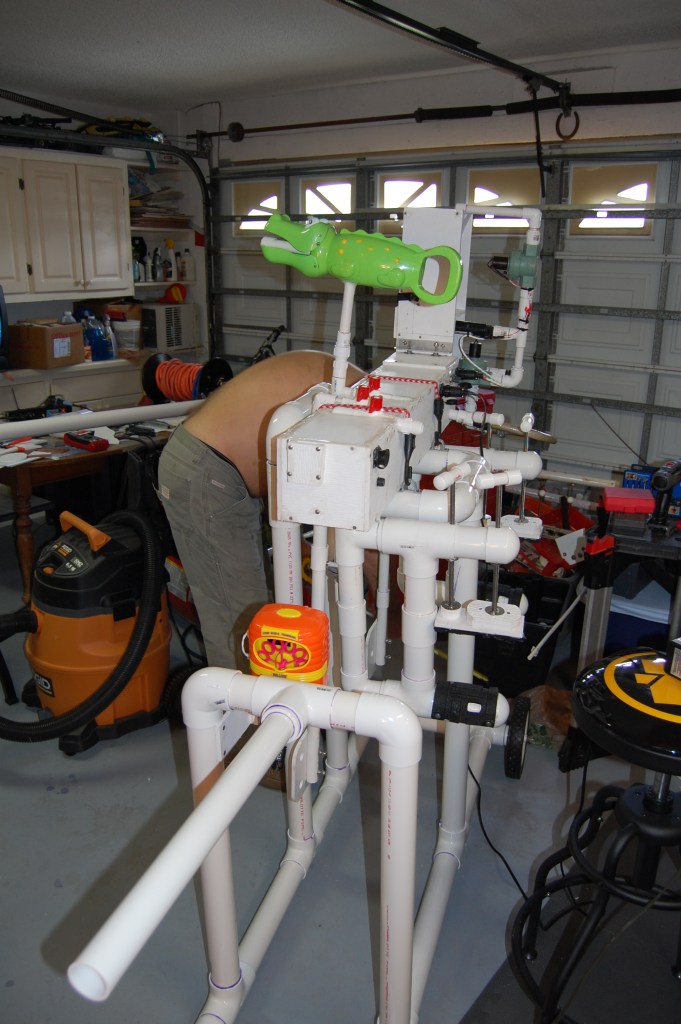
Our early designs consisted of an underwater bubbler/air blower with a small round paddle. Our next addition was the water sprinkler shooting out of the plastic alligator’s mouth. The dolphins would need to press the underwater paddle with their rostrum to turn on the first device, the air blower. We had to design something they could press, they don’t have fingers or hands. They had 30 seconds to go press the other underwater paddle to activate the water sprayer. Eventually we attached a soap bubble machine and/or an unflavored gelatin or ice dispenser. The underwater paddles were designed to have different patterns of holes on them so the dolphins could use their echolocation to choose to what they wanted to turn on.
FINTASTIC NEWS!!!
Fintastic News – We are repairing and improving DESY! The original enrichment device that started it all! Dolphin Enrichment System (DESY) for Dolphin Research Center in the Florida Keys!
Here’s a photo from way back in 2012

Dolphin Enrichment System (DESY) (EED):
Early designs of Dolphin Enrichment System (underwater air blower, water fountain and soap bubble machine)

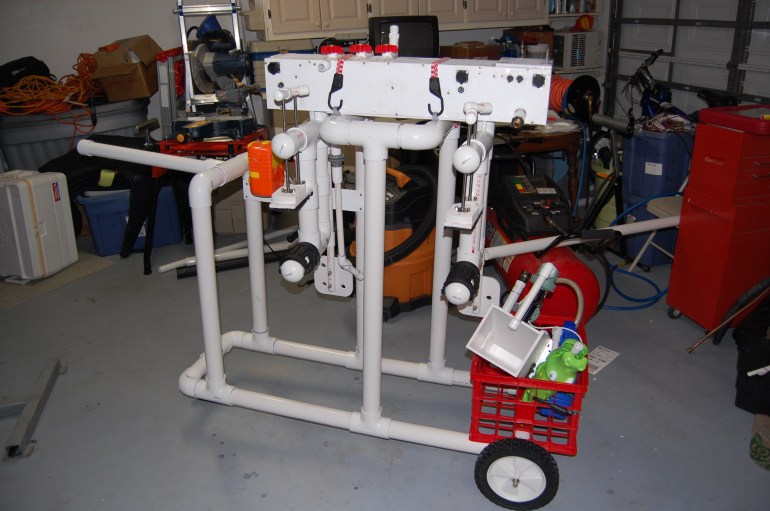
Soap bubble machine and ice/unflavored gelatin dispenser

Bottlenose Dolphin Enrichment – Clearwater Marine Aquarium (retired devices)
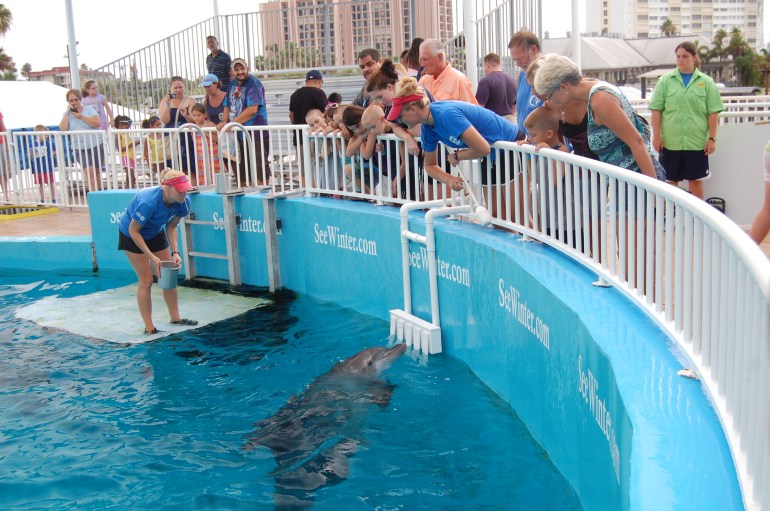
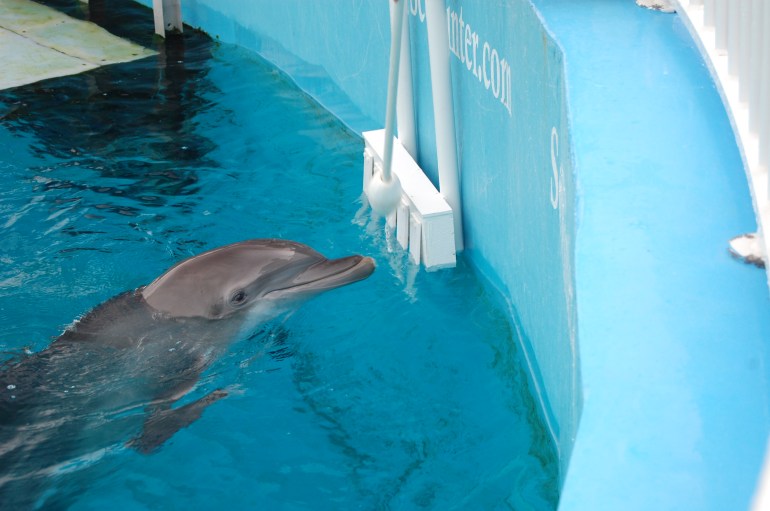
While watching Saturday morning animal show on TV, a program aired featuring a baby dolphin calf named Hope. The aquarium, Clearwater Marine Aquarium (CMA), was able to save and hand-raise the very young orphaned dolphin calf. Because of the Langs’ experience with dolphins, it was obvious that this was an amazing feat and prompted a trip to meet this miracle baby dolphin. At Clearwater Marine Aquarium (Home of Winter, another rescued dolphin), Hope was found living in a large round pool with an underwater platform. She had plenty of floating toys but preferred to blow bubbles under the platform and chase them to the surface. Watching this behavior prompted a conversation with an intern about the intelligence and creativity of dolphins. Naturally, the conversation got around to a description of the EEDs created for DRC. The intern said, “Don’t you move! I’m going to get one of the trainers to come out and talk to you.”
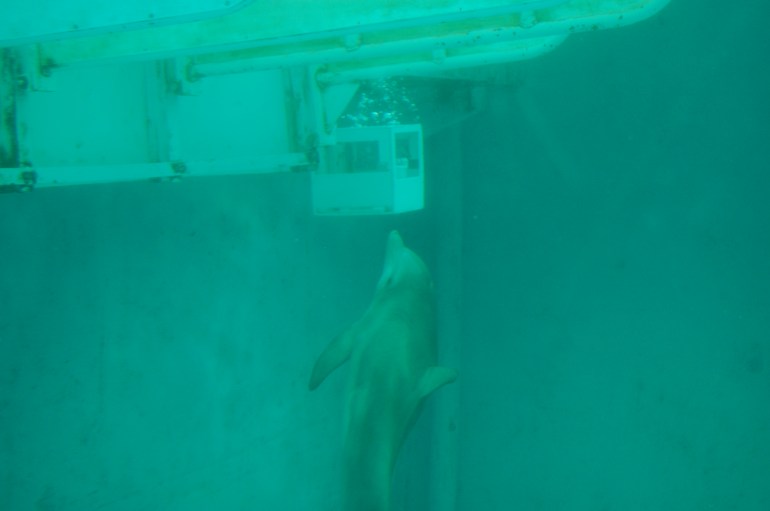
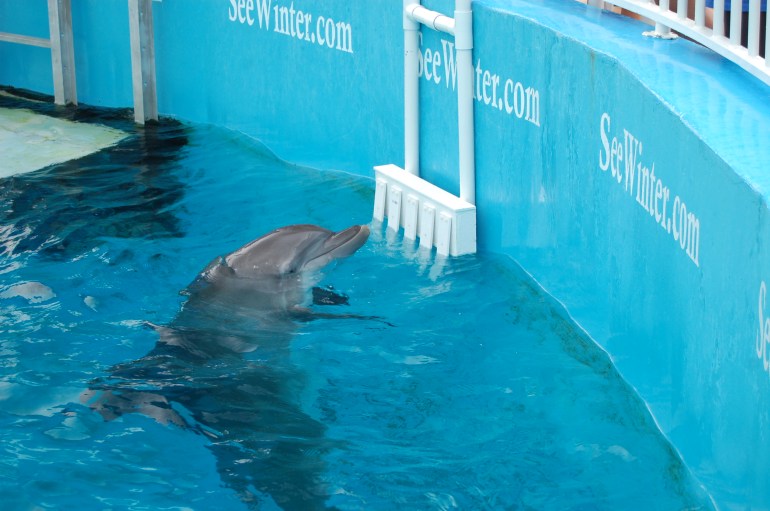
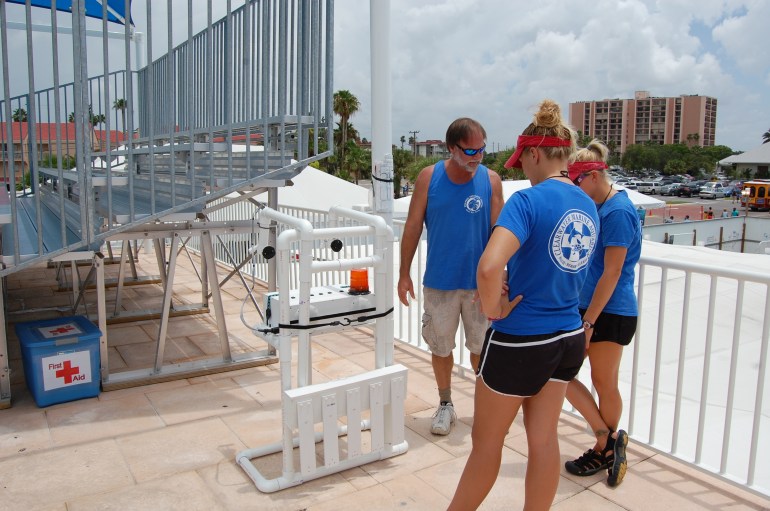
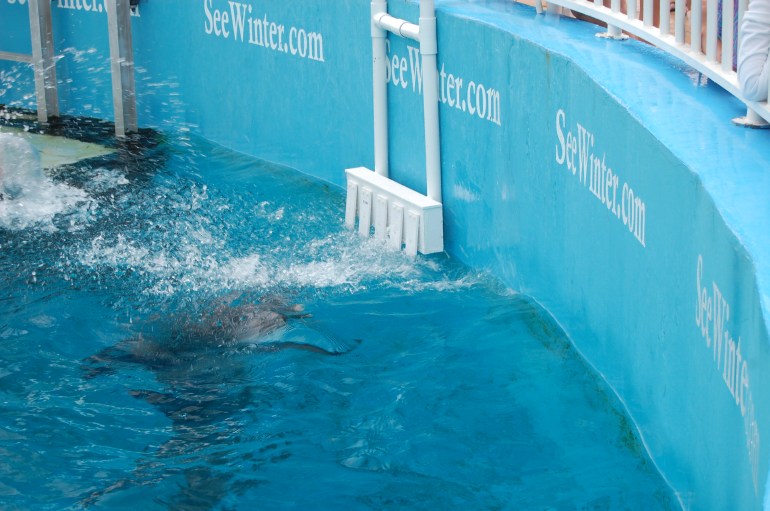
After talking to the trainer, it was agreed that Don would develop an EED for both Hope and Winter. Since Hope was so interested in chasing bubbles, the EED created generated both soap bubbles above the surface and air bubbles 15 feet below the surface. The paddle to activate the EED was attached to a unit that mounted to the side of the pool. When the paddle was pressed, bubbles would be generated for 30 seconds. The dolphin would need to press the paddle again to start another 30 second session. The EED’s challenge for the dolphins was that the underwater bubbles were located up to 30 feet away from the paddle. The dolphins had to realize that something on one side of the pool made something happen on the other side. It only took young Hope about 15 minutes to figure this out. Hope then taught Winter how to use it by example.

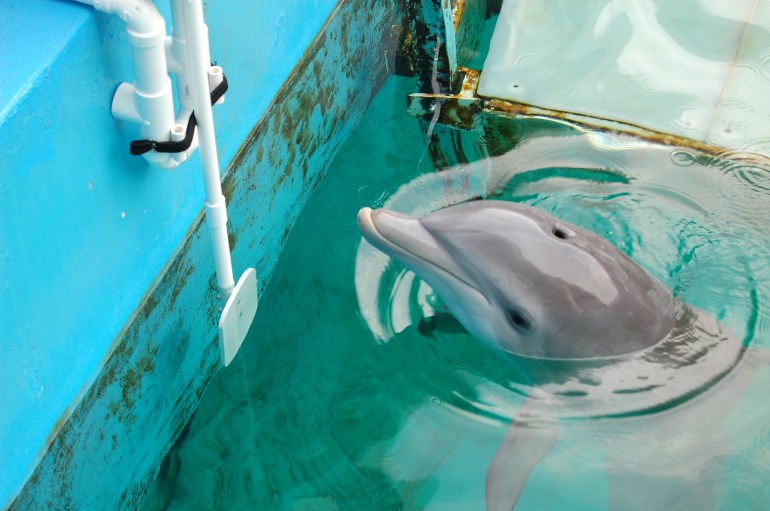
After creating the EED for Winter and Hope, Don also developed a toy for Nicholas, the rescued male dolphin at Clearwater Marine Aquarium (CMA). This EED had paddles that would play music when pressed by his rostrum. The trainers could play musical patterns on their portion of the machine that Nicholas could copy. This EED is also retired.
Bottlenose Dolphin Facts:
Common bottlenose dolphins (Tursiops truncatus) are one of the most well-known and recognizable species of marine mammals. They are found in all temperate and tropical oceans worldwide, and inhabit both coastal and offshore habitats in the marine environment. Did you know that the closest living relative of a bottlenose dolphin is a hippopotamus? It’s true! Early whales, which include bottlenose dolphins, evolved from primitive mammals that once lived on land!
Bottlenose dolphins, along with whales, other species of dolphins, and porpoises, are organized by scientists in the group called Cetacea; therefore, these marine mammals are often referred to as cetaceans. Cetaceans are divided into two subgroups: Odontocete (toothed whales) and Mysticete (baleen whales). Have you seen the movie Finding Nemo? If you have, the whale that “swallows” Marlin and Dory is a baleen whale. These whales have plates of baleen made of keratin, like human hair and fingernails, and the baleen traps their prey so the whales can use their tongue to scrape off the food before swallowing it.
Odontocetes, or the toothed whales, have teeth that allow them to grasp their prey. Bottlenose dolphins have 72-104 cone-shaped teeth that they use to grasp their prey before swallowing it whole. They also use their teeth to play and communicate with one another! Bottlenose dolphins in human care and in the wild rake, or scratch, their teeth along one another’s body to play, show affection, or establish dominance. Their skin is 15-20 times thicker than human skin, so don’t worry if you see them raking each other!
Educational resources: Alliance of Marine Mammal Parks and Aquariums, Zoo Logic
Alliance of Marine Mammal Parks and Aquariums Bottlenose Dolphin Fact Sheet https://www.ammpa.org/education/species-fact-sheets
 Animal Enrichment Systems