Spider Monkey Enrichment – Florida Institute of Technology @ Brevard Zoo
Don and I have been working with Dr. Darby Proctor, and Dr. Kate Talbot of Florida Institute of Technology (FIT) on the design of collaborative enrichment for the Brevard Zoo’s spider monkeys. We had a meeting at the Cognitive area of the zoo and they showed Don some sketches, and he took measurements on how far the monkeys could reach.
The “Pull Bar Apparatus” has a long aluminum handle and will be set up outside the spider monkey habitat so the handle can be pull through the fence to get treats. The monkey that is pulling the long handle can easily reach treats and other monkeys can get to the far end of the enrichment to get treats.
More to come!!!


Primate and small animal environmental enrichment device (EED) – Central Florida Zoo
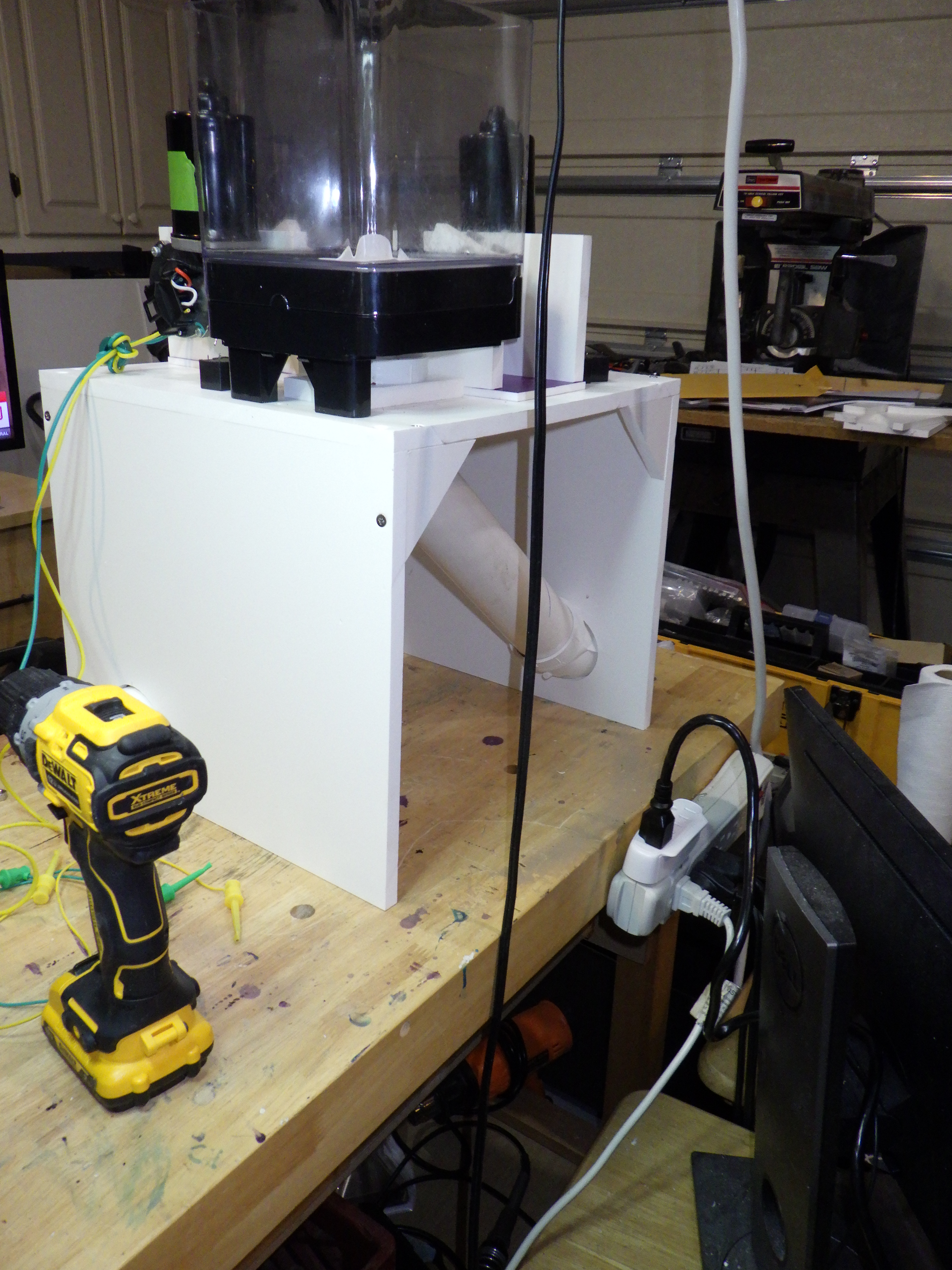
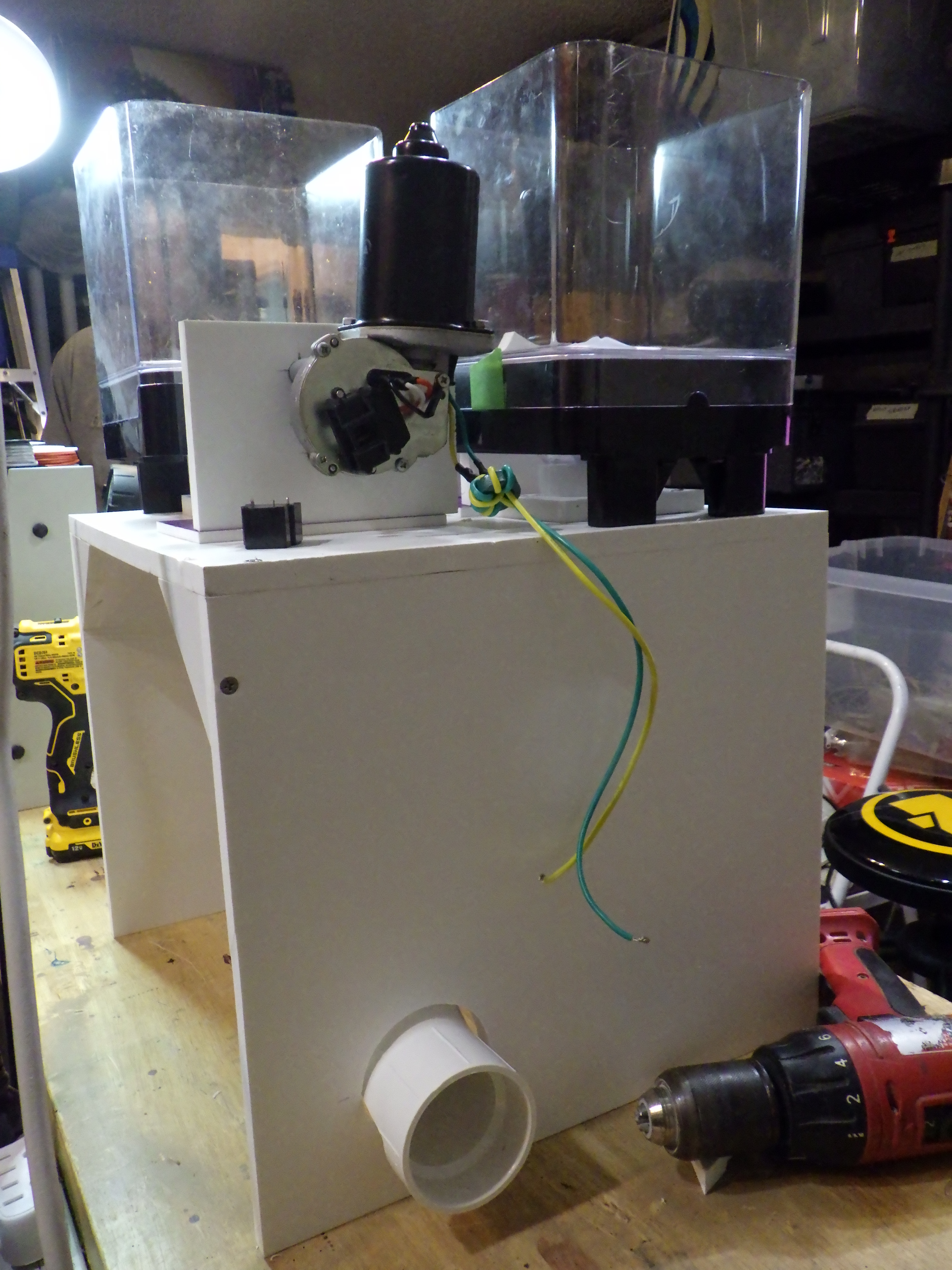
Progress Update: This is the dispenser section of the EED. It consists of two cereal dispenser driven by windshield wiper motors. It will be controlled by a battery powered control system activated by switched (push buttons) that the animals can control. There will be three switches, one for each dispenser, and the third will activate both dispensers simultaneously. This allows animals to share the fun or just get a treat for themselves. Lights will indicate when the buttons are active. The zookeepers can use programmable timers to set the inactive durations and number of treats to be dispensed.

COMING SOON! Small Primate Enrichment at Central Florida Zoo
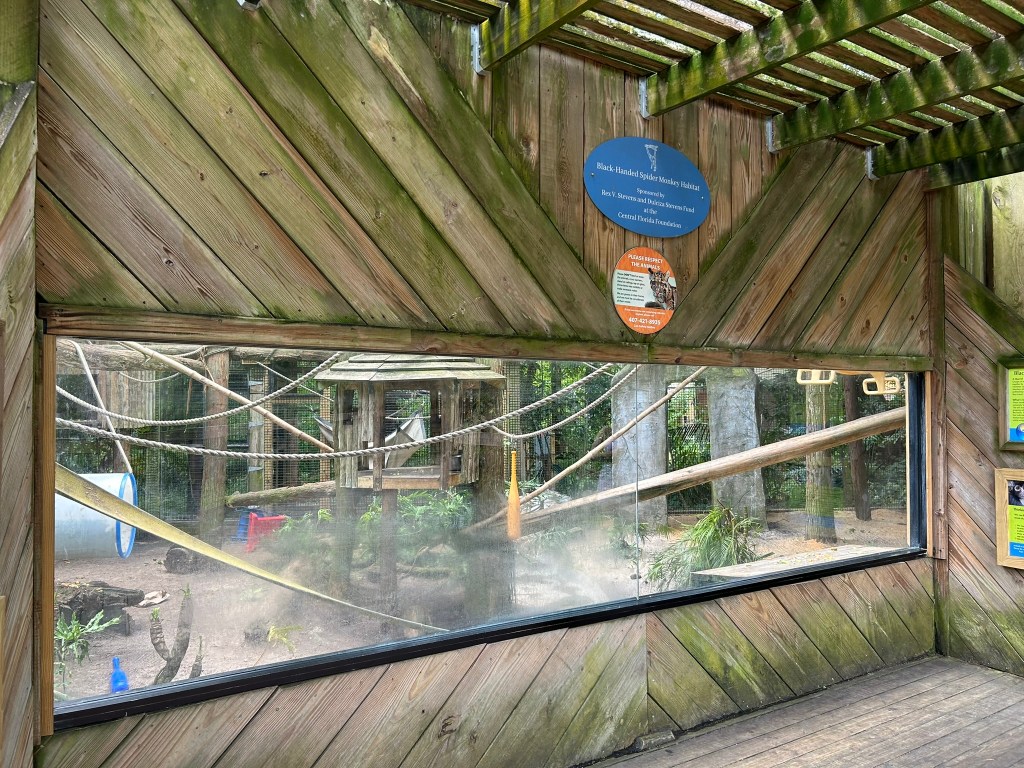
Exciting news! We had a meeting with the carnivore keepers at Central Florida Zoo last week to discuss building two enrichment devices. One for their small primates and one for their African crested porcupines “Pancake and Pluto”. More to come soon!
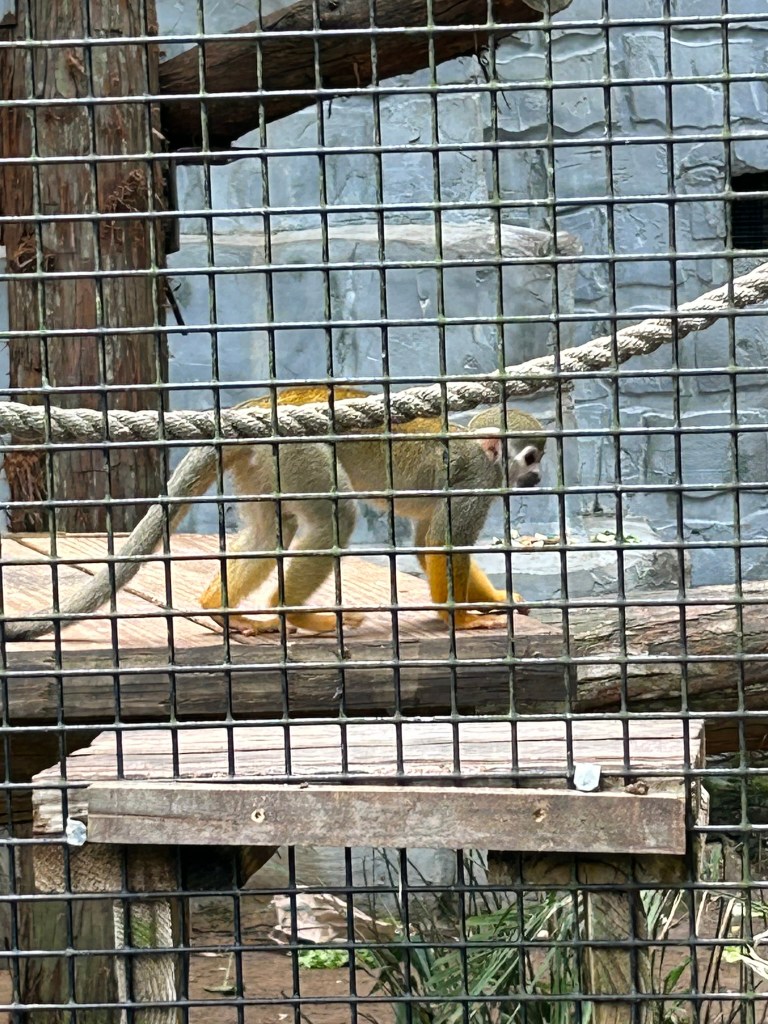
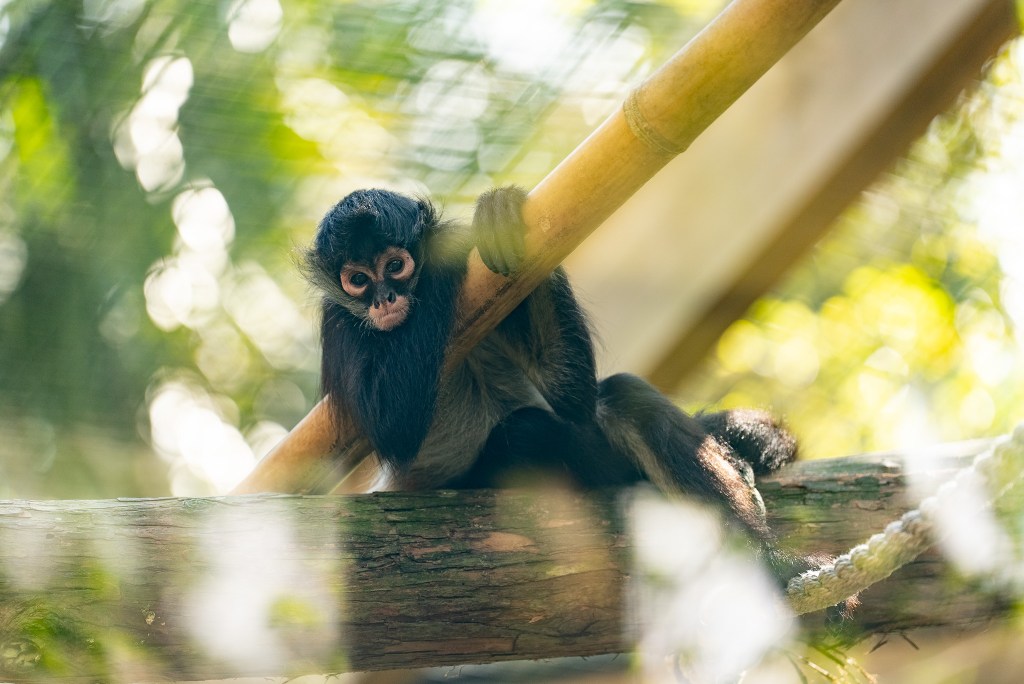
Videos from 5-26-23 Spider Monkey computerized testing apparatus
We delivered the first version of the Spider Monkey computerized testing apparatus to Dr. Darby Proctor & Dr. Kate Talbot at the Brevard Zoo. They will test this version to further develop mechanical and software designs. Don already made one revision to the area where the “reward pellets” dispense. He cut a piece of PVC, bent the ends and made a “tray” so the monkeys can pick up the pellets. The Spider Monkeys were a part of the testing yesterday and were very interested! Scroll through the photos below

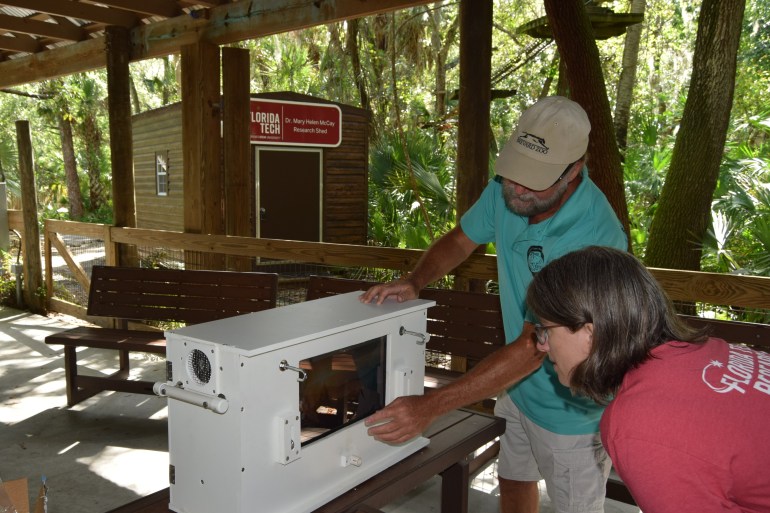
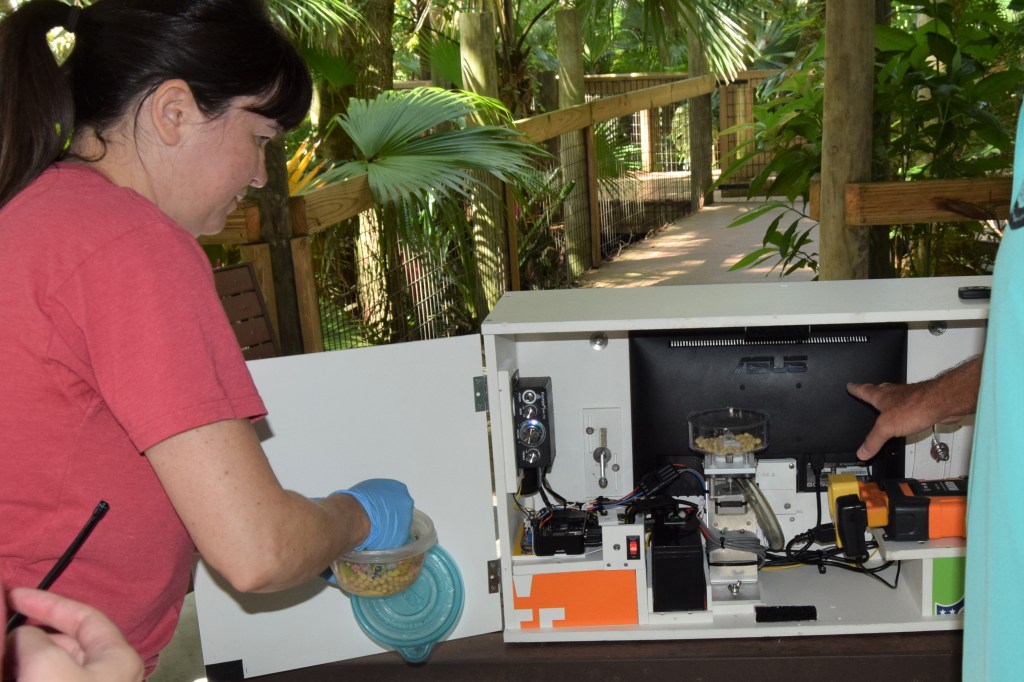
loading the food/treat pellets 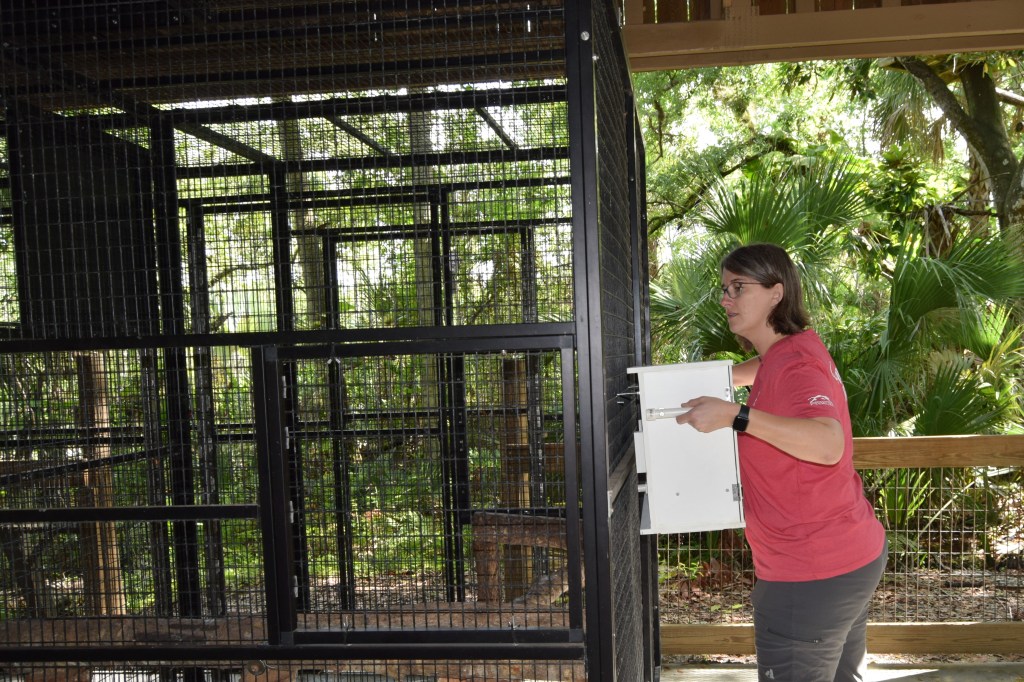
installation on the cage wall 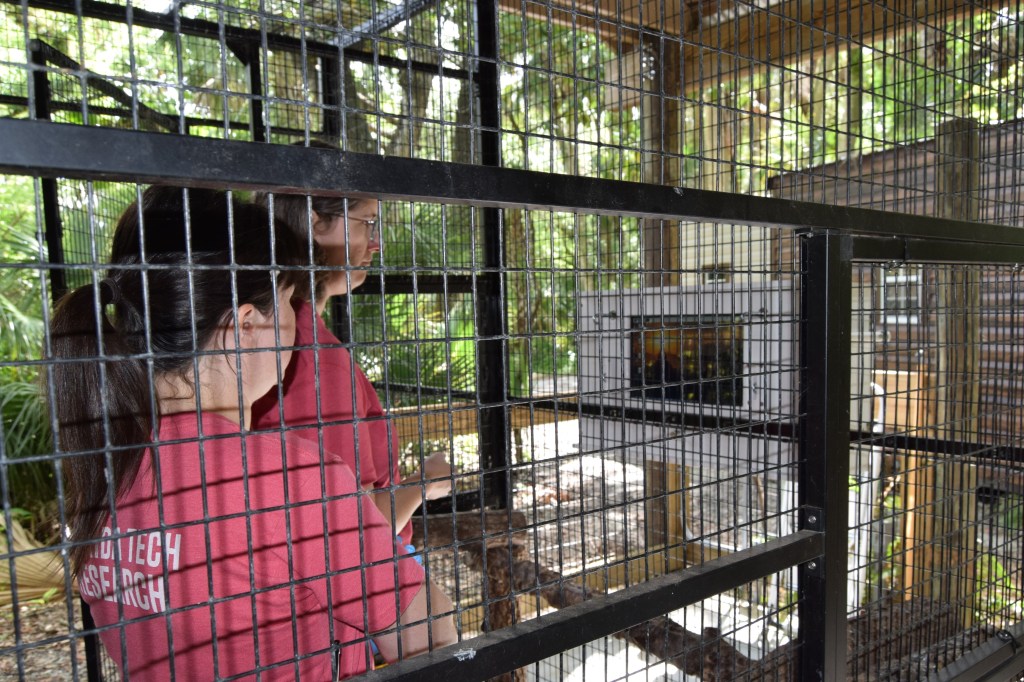
alignment check 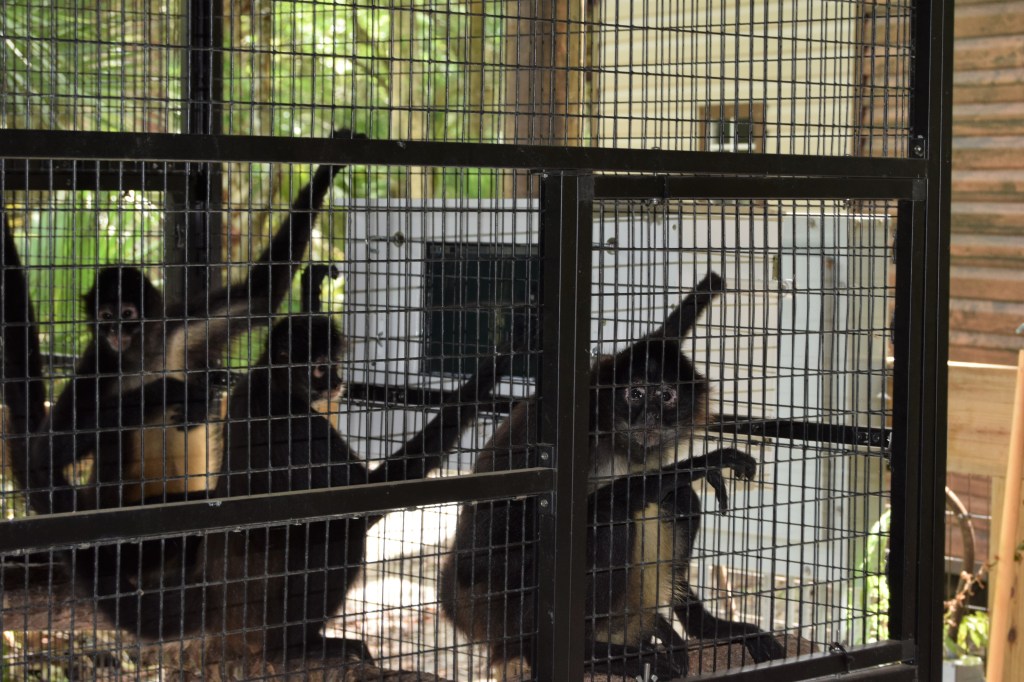
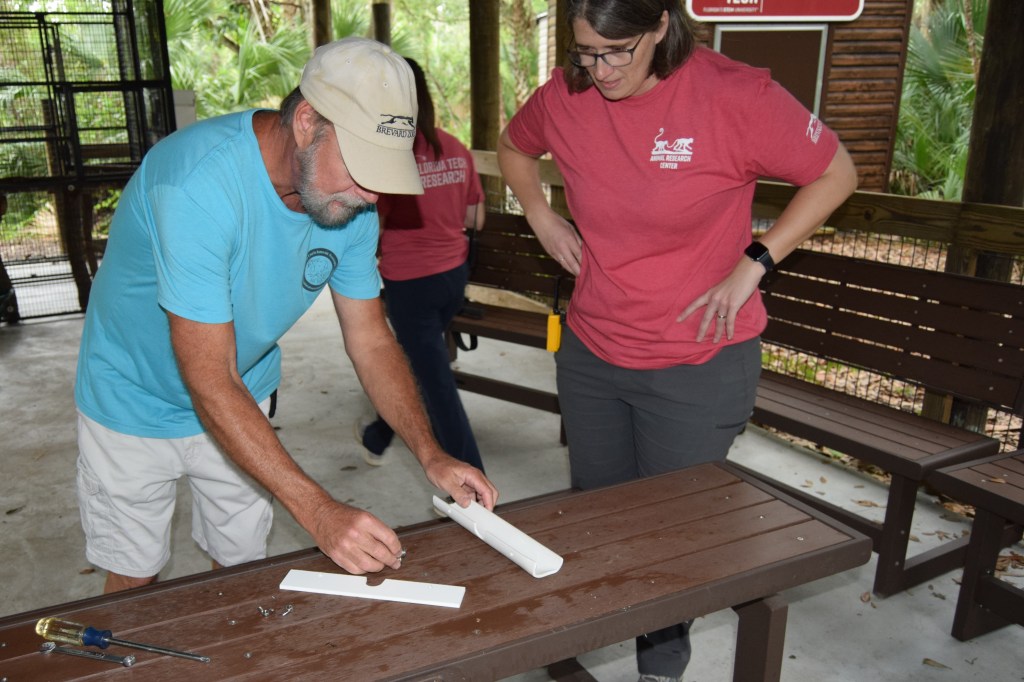
revised pellet “tray” design 
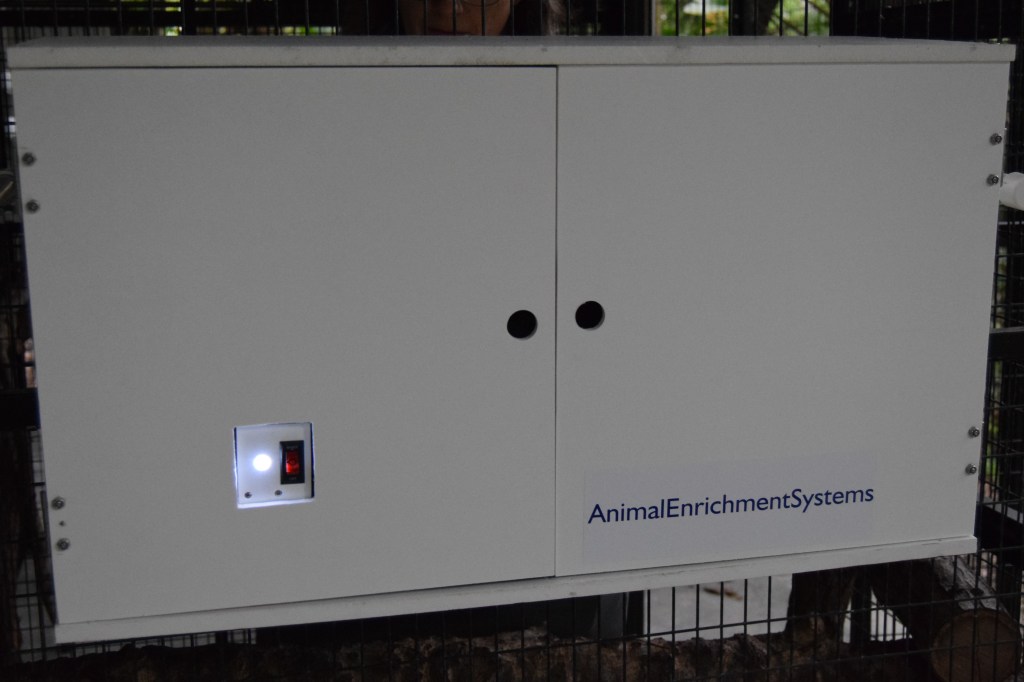
the view for the “humans”. This is the status light to show that everything is working 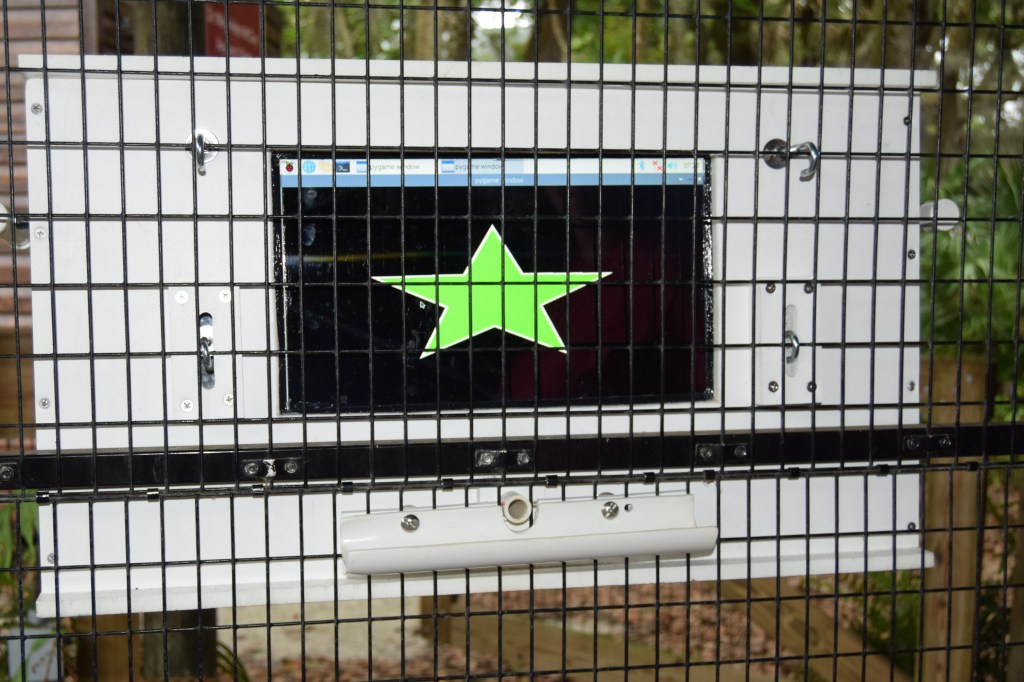
Kate took this photo, thiis shows the star that the monkeys can touch to be rewarded with a food pellet. You can see the new tray design 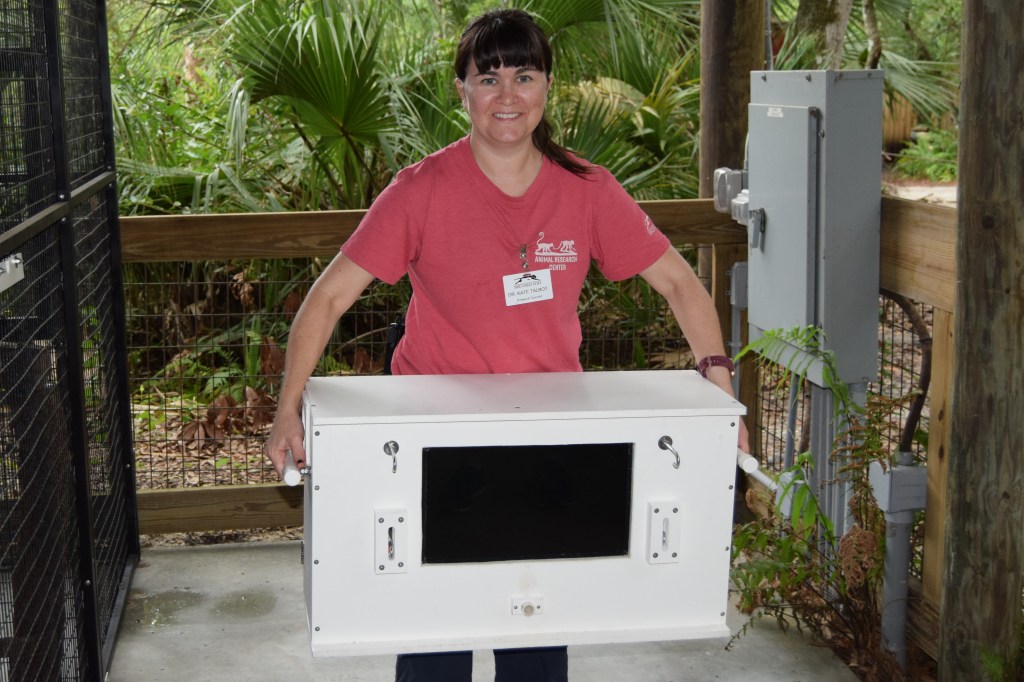
Kate
Spider Monkey EED update
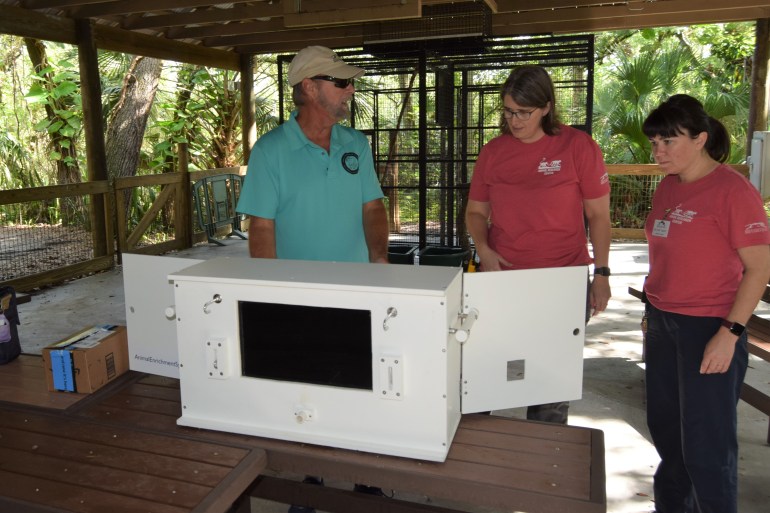
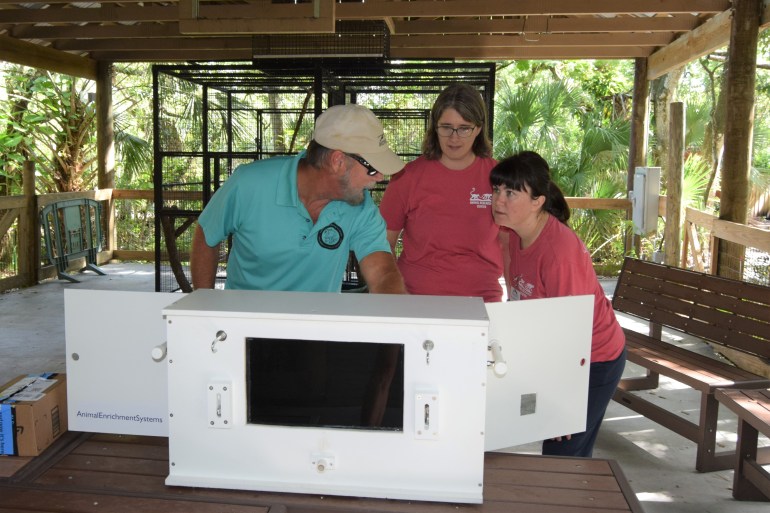
On Tuesday, 4/25, we met with Dr. Darby Proctor, FIT at Brevard Zoo’s at the Cognitive Research Center to fit test the primate EED chassis.
More to come soon.
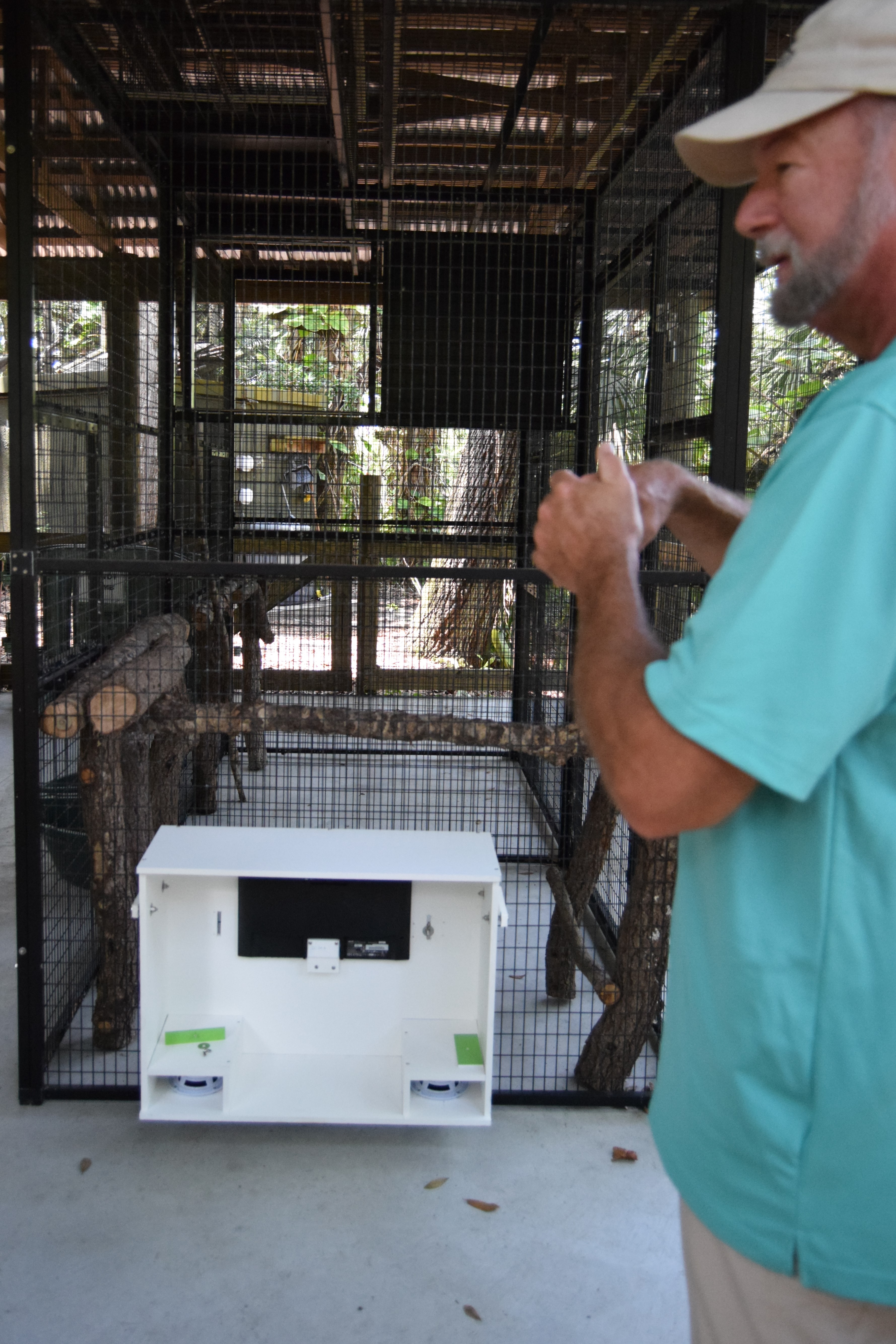
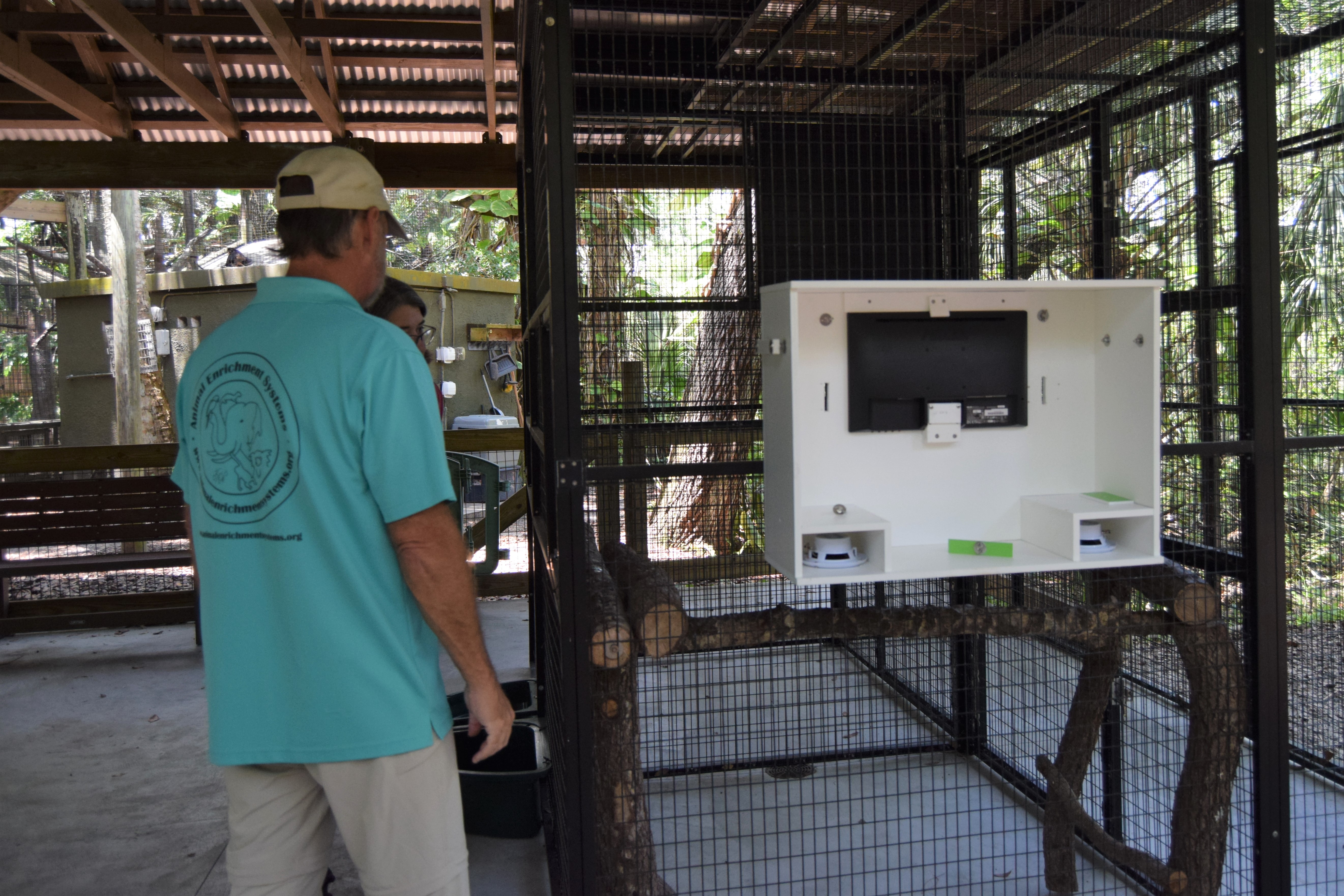
Spider Monkey Enrichment update:
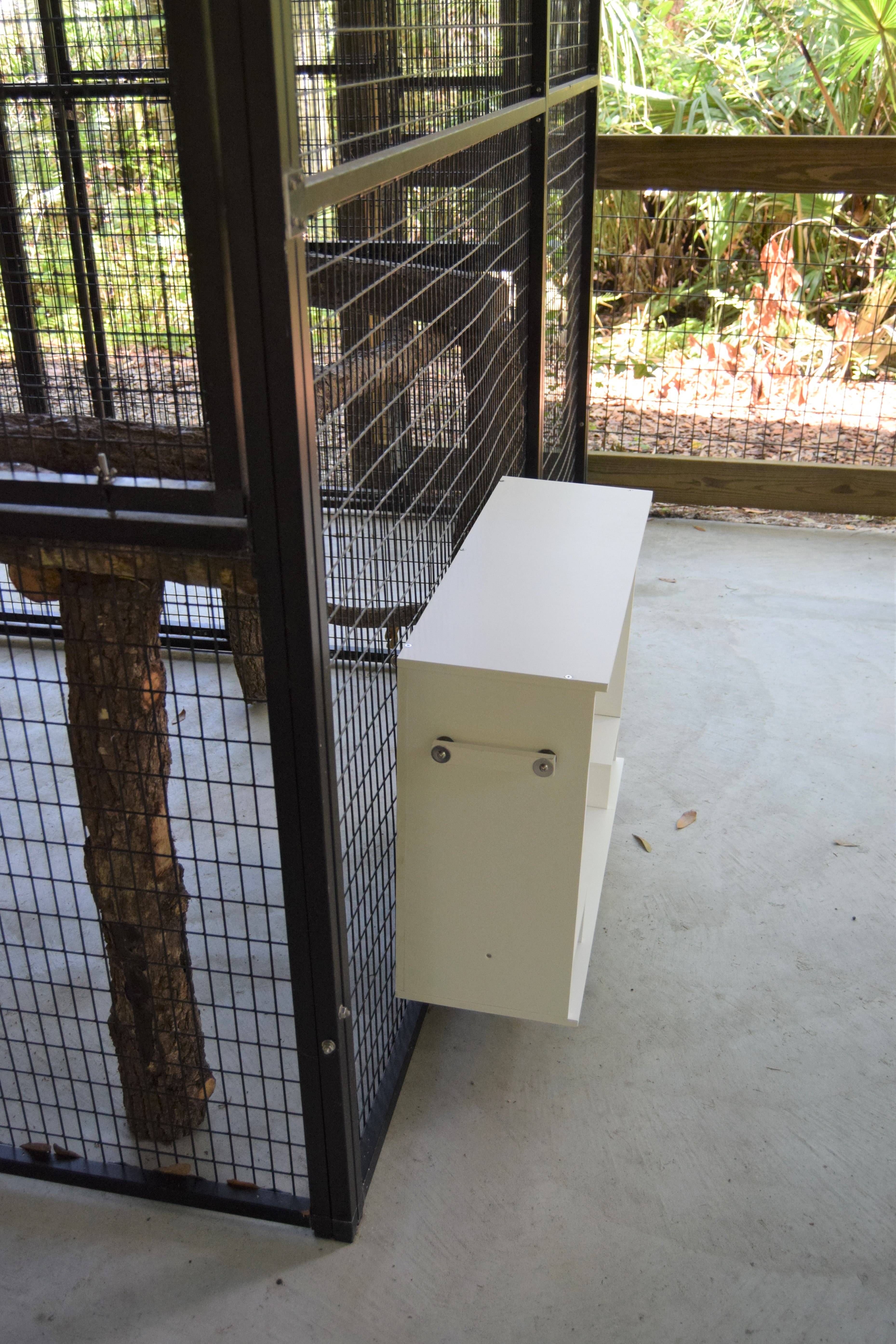
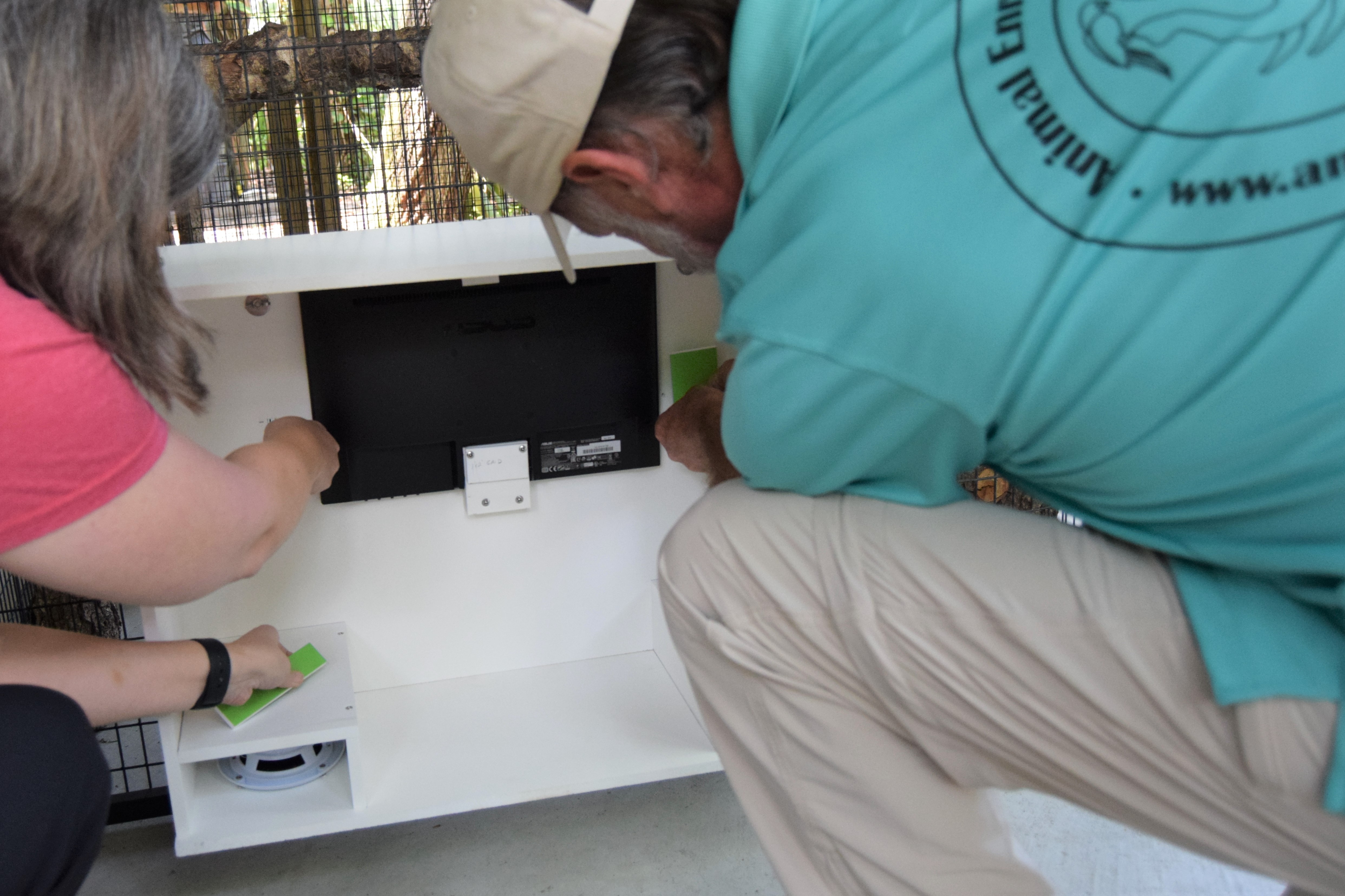
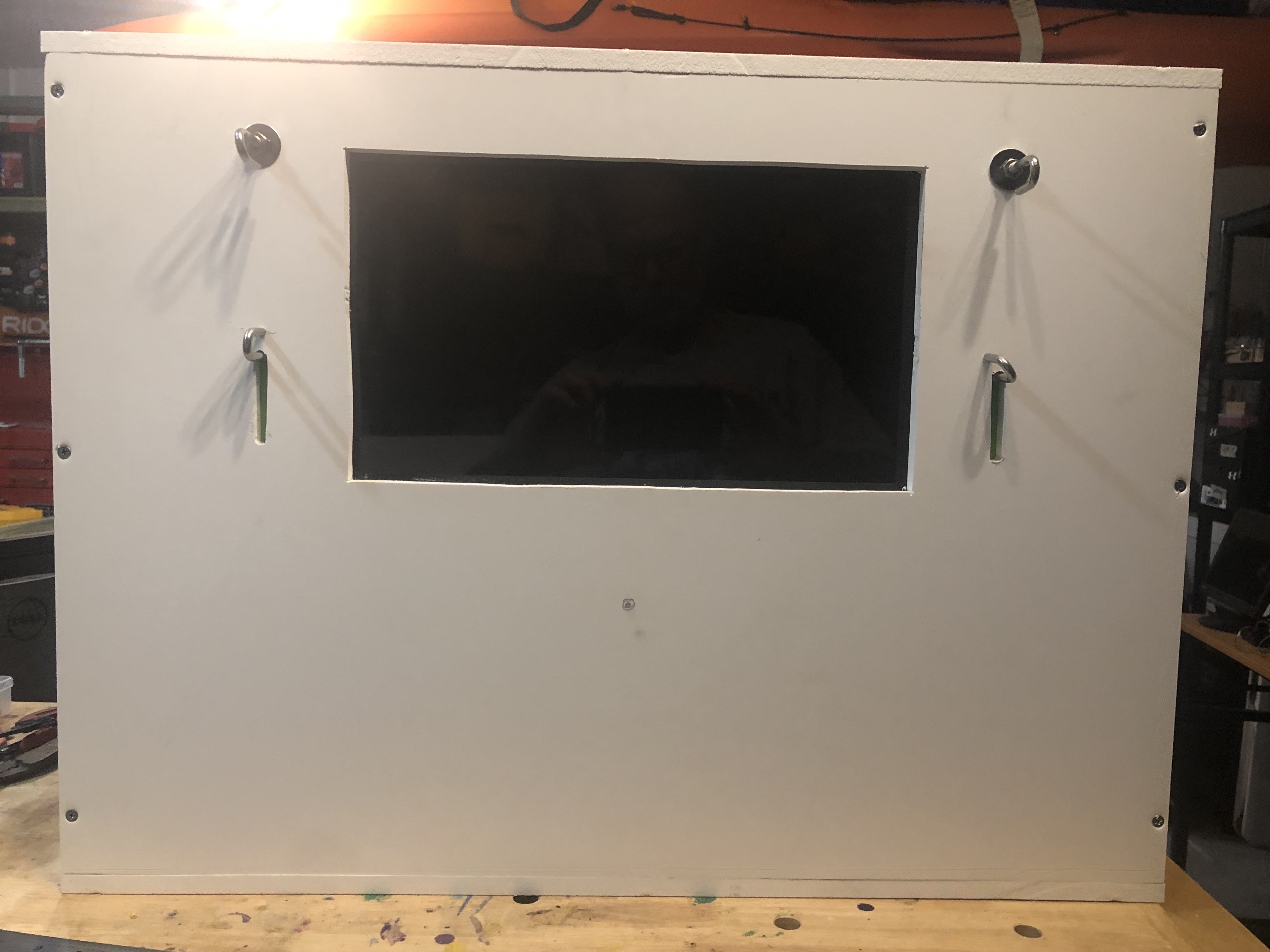
Here are two pictures of the test chassis for the primate EED. This unit will be used to fit-check the attachment system to the enclosure. Once the fit is verified the remaining components will be added to the chassis. This will give us a chance to maximize the layout and allow for reducing the size of the chassis.
We are meeting with FIT Professor at Brevard Zoo this Friday at the cognitive research center.
touch screen
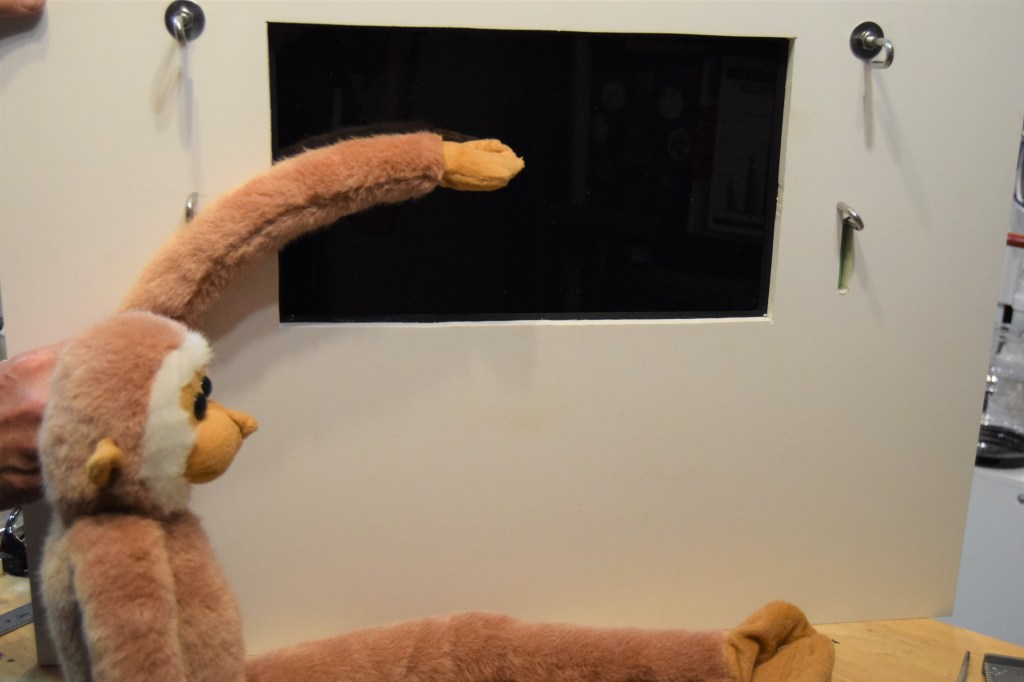
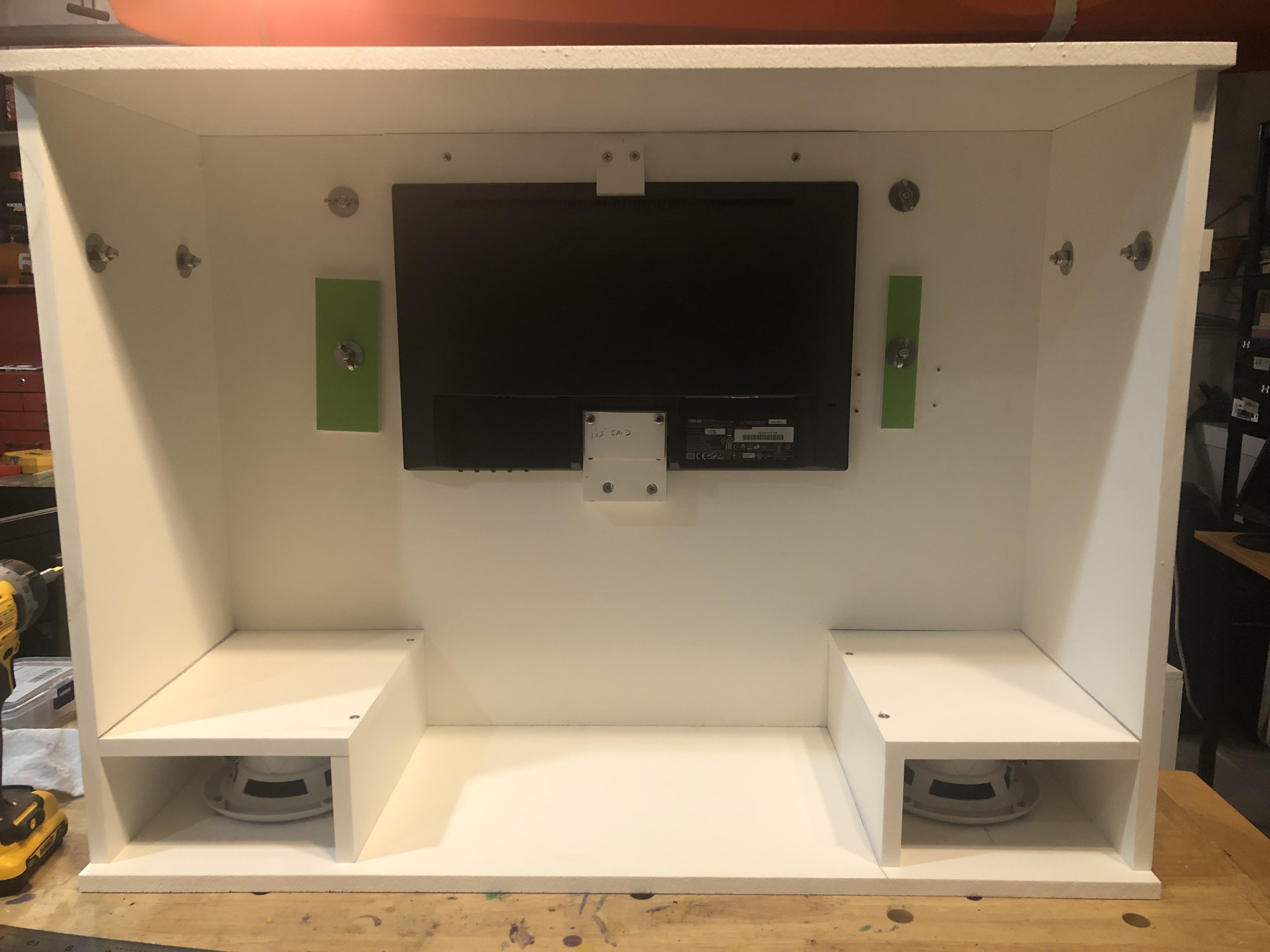
Back of device / speakers, etc. front view with touch screen accessible to the spider
monkeys
Our newest Environmental Enrichment project – Spider Monkeys!
We are working with Dr. Darby Proctor & Dr. Kate Talbot, professors in the School of Psychology at Florida Tech, and software engineer Jayden Cammarata to develop a first-in-kind, low-cost, computerized testing apparatus for the spider monkeys at Brevard Zoo. The apparatus will allow the spider monkeys to play cognitive “games” using a touchscreen and receive small treats for correct choices. Scientists can evaluate how the monkeys perform on these games to learn more about how they think and make decisions. Cognitive and behavioral testing provides monkeys with mental stimulation and is considered a form of enrichment since it occupies their time and helps monkeys stay engaged with their environment.
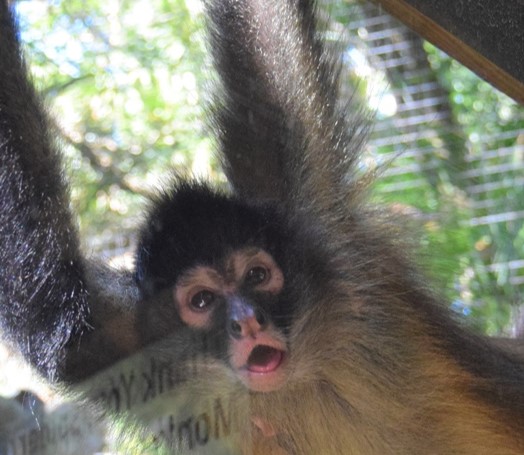
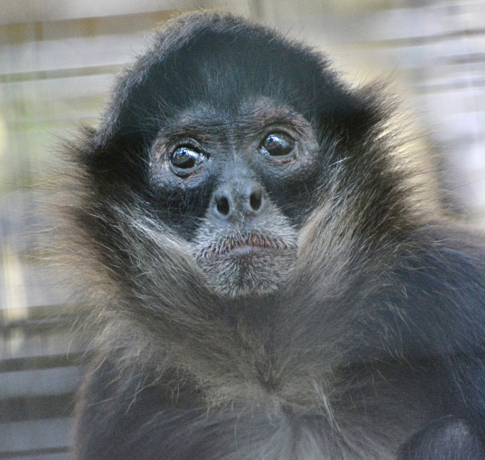

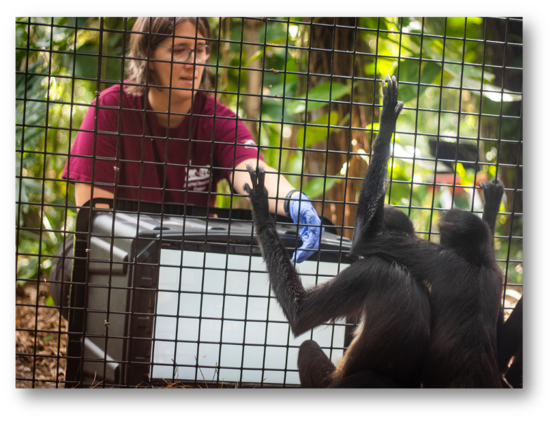

December 2022 – Exciting news! – stay tuned for information on our collaboration with FIT (Florida Institute of Technology) for spider monkeys!
Primates/Orangutans -Environmental Enrichment Device (EED)
Location: ZooTampa at Lowry Park, Tampa, FL
This EED is currently being used behind the scenes in the Orangutan habitat. It was previously used in the chimp habitat.
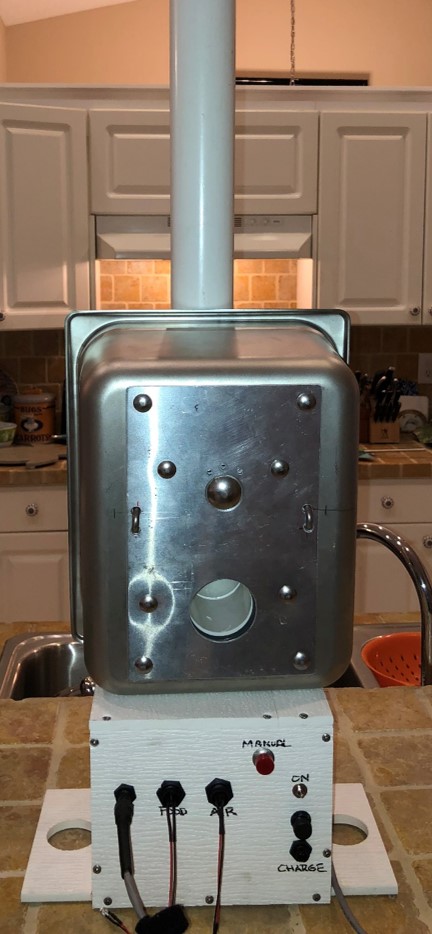
stainless steel housing for the button that primates push. See photo below to see how it is attached to the EED
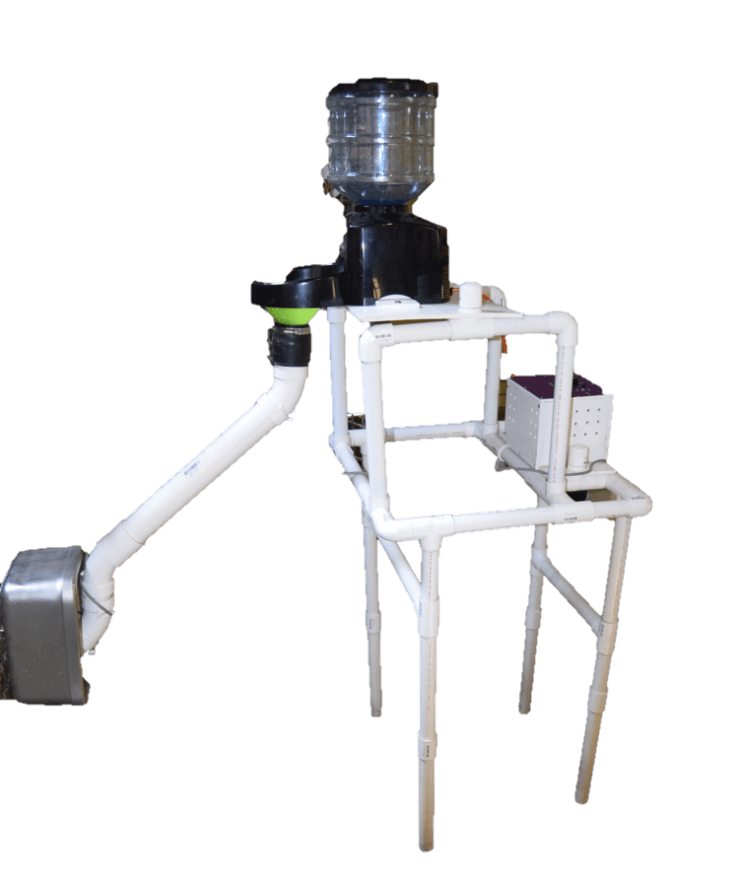
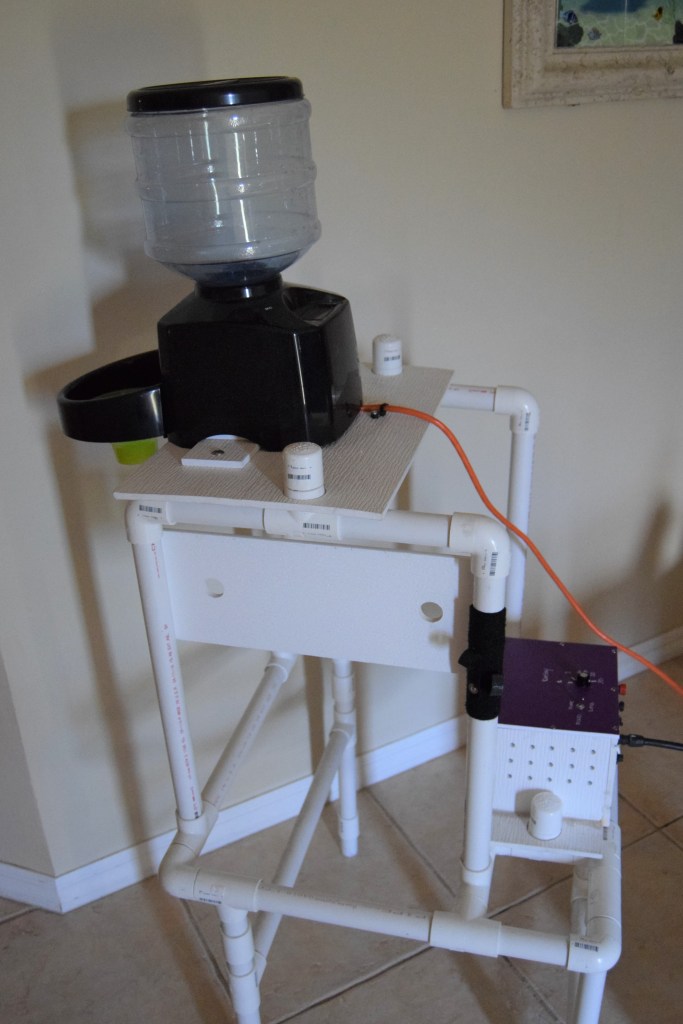
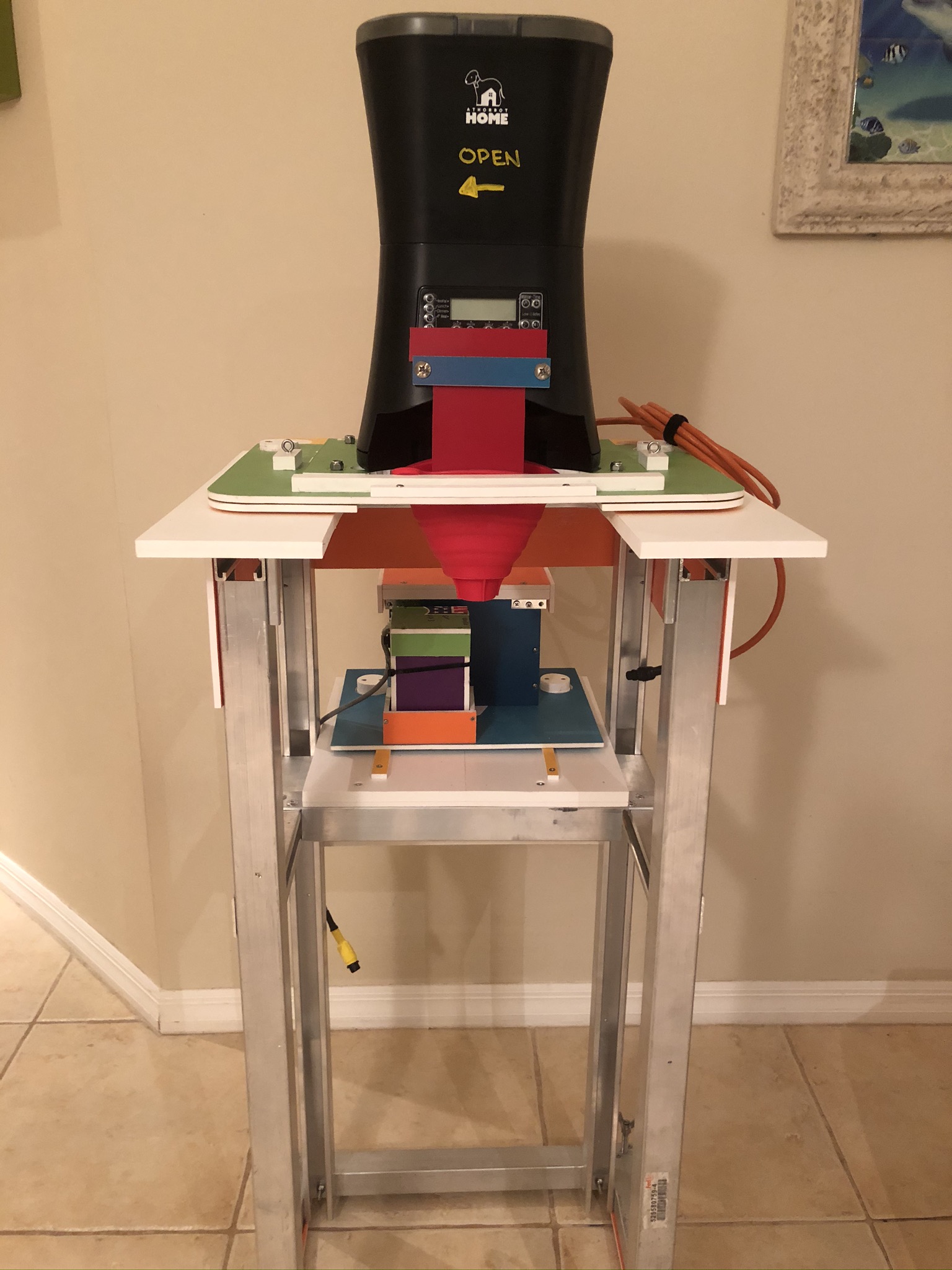


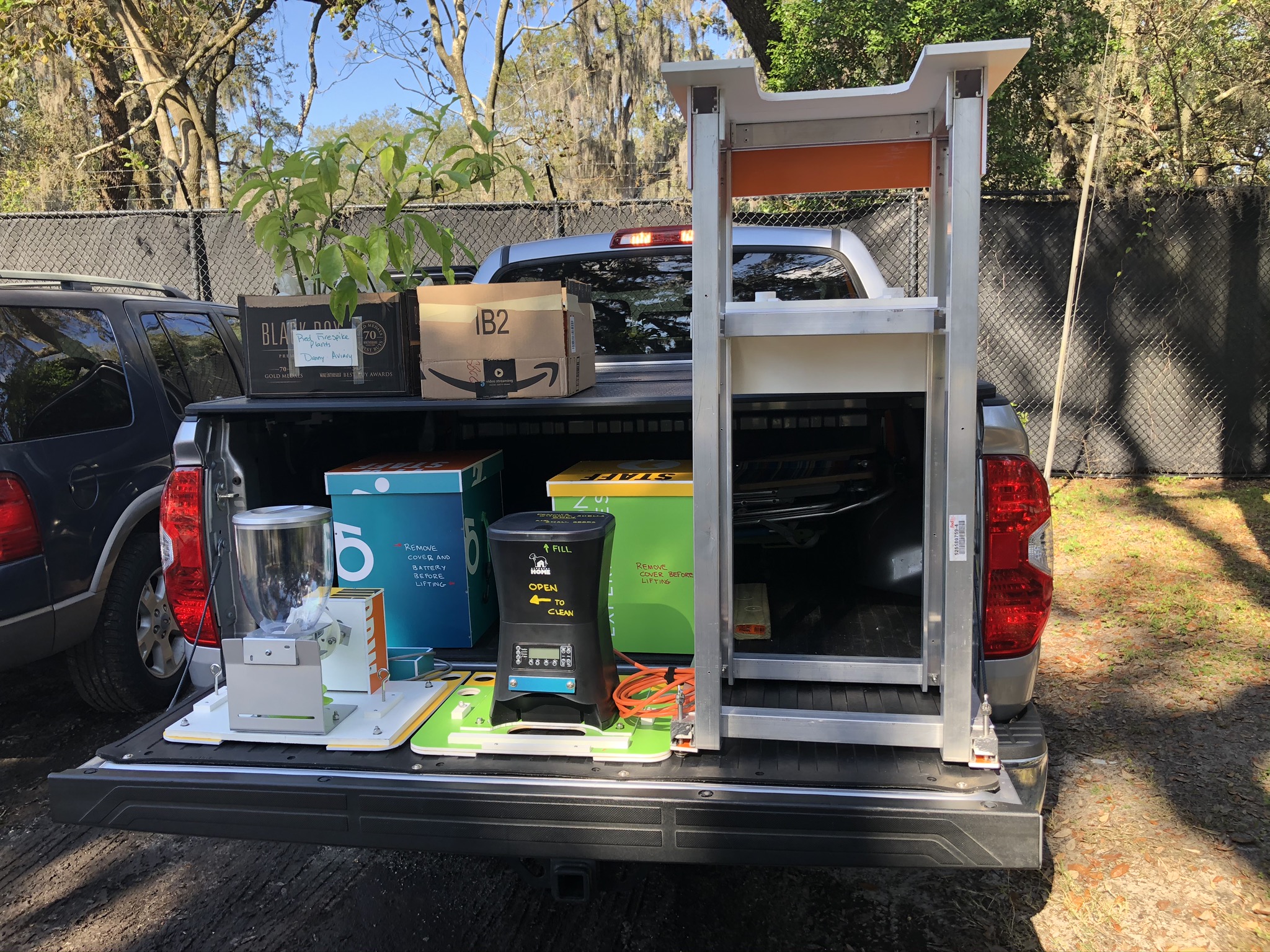

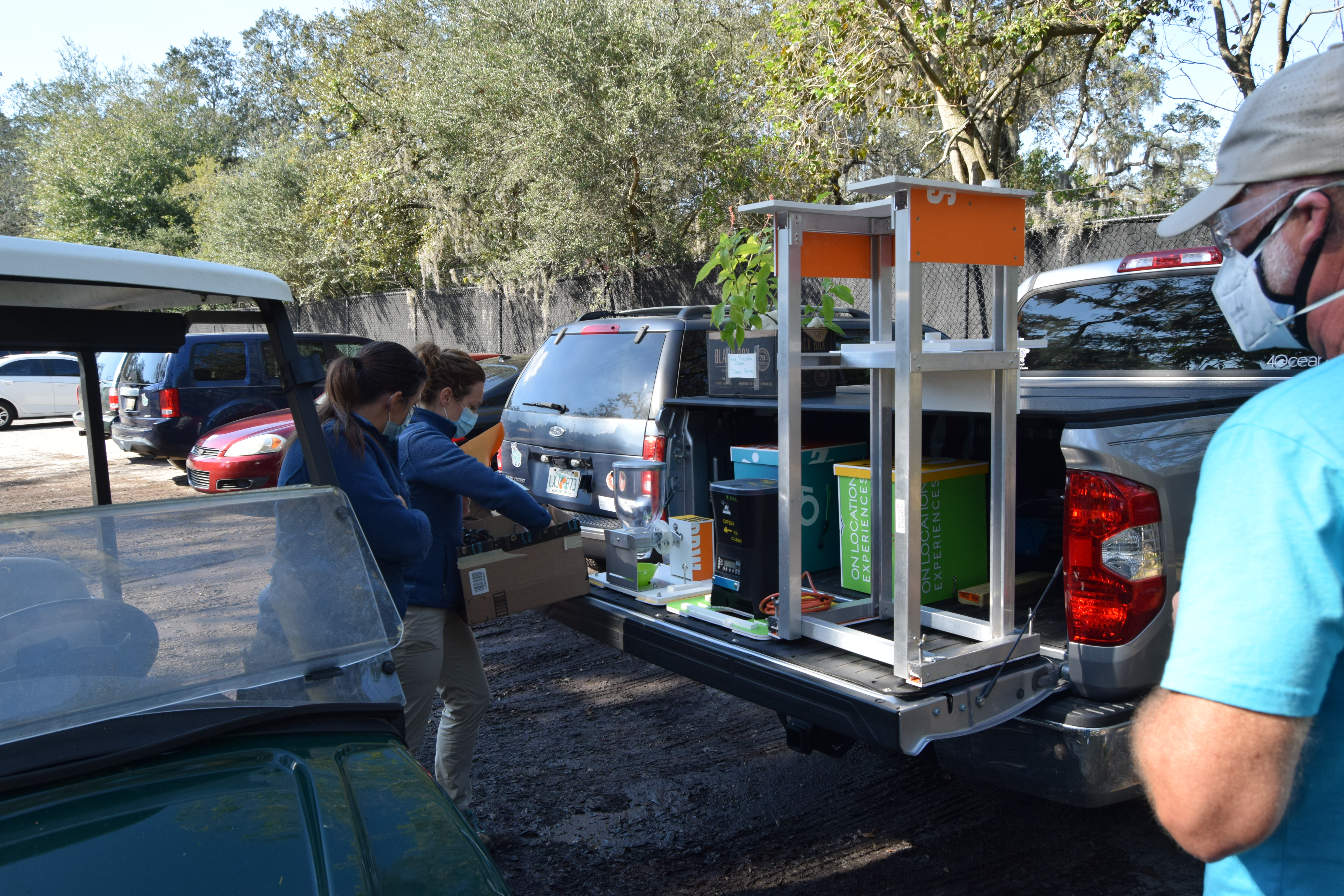
This is a new feeder configuration that can be set up for use on either the black bear EED or the primate EED. This can dispense small seeds and shelled peanuts
We delivered the new feeders to ZooTampa in mid December.
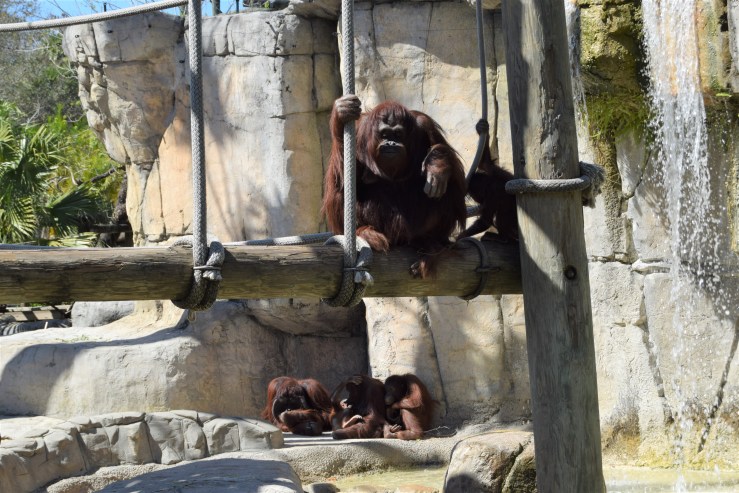
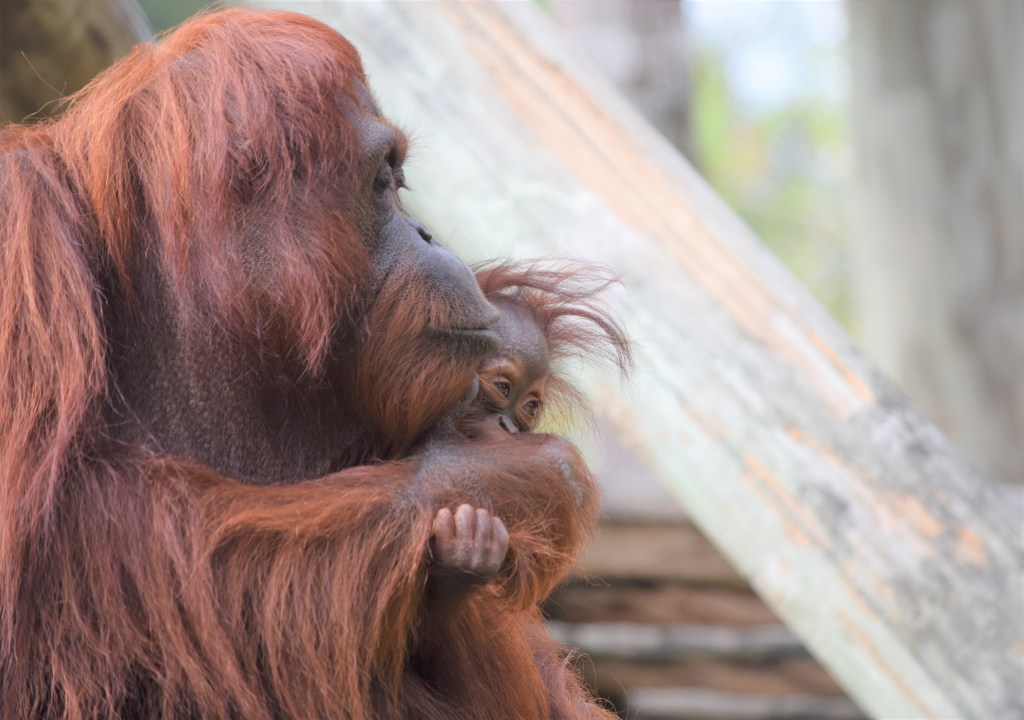
Orangutans are red-haired apes that live in the tropical rainforests of Sumatra and Borneo in Southeast Asia. The orangutan is one of humankind’s closest relatives –sharing nearly 97% of the same DNA. The word orangutan comes from the Malay words “orang hutan“, meaning “person of the forest“. Orangutans are endangered. Deforestation in the forests where they live has reduced their habitat, and illegal hunting has put populations at serious risk. They have become extinct in some parts of Asia, Most of their forest habitat in Borneo and Sumatra has been lost to make room for palm oil plantation.
Orangutans are highly arboreal in nature. They spend 90% of their lives on trees. Adult orangutans rarely touch the ground. They have a 7 feet span between arm to arm and their arms stretch beyond their height (about 5 feet), when they stand. These huge arms help them to swing on trees. On average, orangutan females are around 45 inches tall, and males are around 54 inches (tall. Females weigh an average of 81.5 lbs and males average around 191 lbs. They eat during the day and their diet consists mostly of fruit and leaves. They also eat nuts, bark, and insects and drink water that collects in tree holes. They sleep in leafy nests high off the ground.
Female orangutans give birth about once every eight years. Infants stay with their mother for six to seven years, until they have learned the necessary skills to survive on their own. During this time, a very special bond is formed between the mother and baby. These apes generally have long lives – in zoos they can live for 50-60 years, and in the wild, 30-40 years.
 Animal Enrichment Systems